Belize Mission Team
GHTC’s Belize Mission Team gathers, trains, and supports members of our faith community as they work together in spiritual mission in Belize. The work we have done there has included dental care and vision screening for children, service projects in the community, and an annual summer camp for children. Opportunities are available for parishioners of all skill levels and ages, including families. For more information visit ghtc.org/contact and select “Belize Mission Team” from the contact form’s drop-down menu to email the ministry leader.
Belize Mission Team
GHTC’s Belize Mission Team gathers, trains, and supports members of our faith community as they work together in spiritual mission in Belize. The work we have done there has included dental care and vision screening for children, service projects in the community, and an annual summer camp for children. Opportunities are available for parishioners of all skill levels and ages, including families. For more information visit ghtc.org/contact and select “Belize Mission Team” from the contact form’s drop-down menu to email the ministry leader.
Reflections from the 2026 Belize Summer Camp
The Belize Summer Camp is a summer day camp for 75 to 100 Belizean children. Over the span of one week, Grace & Holy Trinity youth (age 14 and up) and their adult mentors will plan and lead daily camp activities, with the help of two bi-lingual Belizean teachers. There are opportunities for the entire GHTC community to engage with the Belize Summer Camp Mission throughout the planning, execution, reflection and assessment process. For more information visit ghtc.org/contact and select “Belize Mission Team” from the contact form’s drop-down menu to email the ministry leader.
Click the links below to take you to the individual reflections.
Greetings & First Report by Catherine Perrin
Short Reflection by Beth McClelland
Report by Keeley Moffatt
July 12 Reflection by Catherine Perrin
Interview with Students Aniylah, Charlotte & Mary by Father Brent
July 14 Reflection by Catherine Perrin
July 15 Reflection by Catherine Perrin
July 16 Reflection by Catherine Perrin
July 17 Reflection by Catherine Perrin
Interview with Students Sidney, Charles & Will by Father Brent
Culmination Reflection by Alice Herlihy
Belize Summer Camp Photos
Greetings & First Report Written by Catherine Perrin (Saturday, July 11)
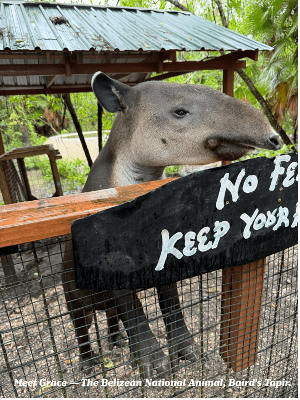
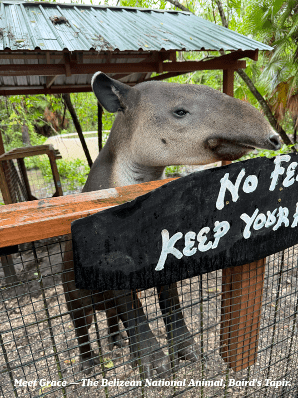 Hey, we are actually in Belize! The campers come tomorrow and the fun begins. It was a pretty innocuous flight down. Everyone arrived in one piece with all their belongings. Always a plus. And then the fun began. With the weather system that has since left, there was so much rain that the Mopan River flooded and washed out a portion of the road to our lodging right outside of San Ignacio, located in western Belize. Luckily, we were able to stop at the Belize Zoo until we got word that the road had opened up. So, we did not have to find alternative accommodations for the night. The Belize Zoo is not huge, but it does allow us to see the native wildlife.
As weary travelers, we finally arrived at the Log Cab-Inn and settled in. It took the youth about two minutes to get into bathing suits and jump into the pool before dinner. And apparently the swimming pool was visited by those young people who were not ready to hit the hay as early as us old fogeys.
Sunday dawned and we had an early breakfast before going to Clarissa Falls where the camp will be held. After a serene Morning Prayer down by the river, we hit it. Everyone jumped in to get the camp ready for tomorrow. Supplies were sorted, balls blown up, sports equipment was set up, and everyone got familiar with the grounds. We learned some of the songs that the campers will learn. Then we had a wonderful lunch made by the owner of Clarissa Falls, Chena, a great friend to Grace and Holy Trinity.
The afternoon was filled by the visit to the local Mayan temple, Xunantunich. No one should come to this area of Belize without experiencing this temple. Belize takes seriously its culture and the guides at these places are highly educated about the role of the Mayans and the region’s archeology.
We finished the day with a reflection time and Compline. It is a really good group of missionaries. Tomorrow is a new day and the excitement will begin as 103 campers will arrive. Pray for us.
Peace,
Catherine Perrin
Short Reflection Written by Beth McClelland (Saturday, July 11)
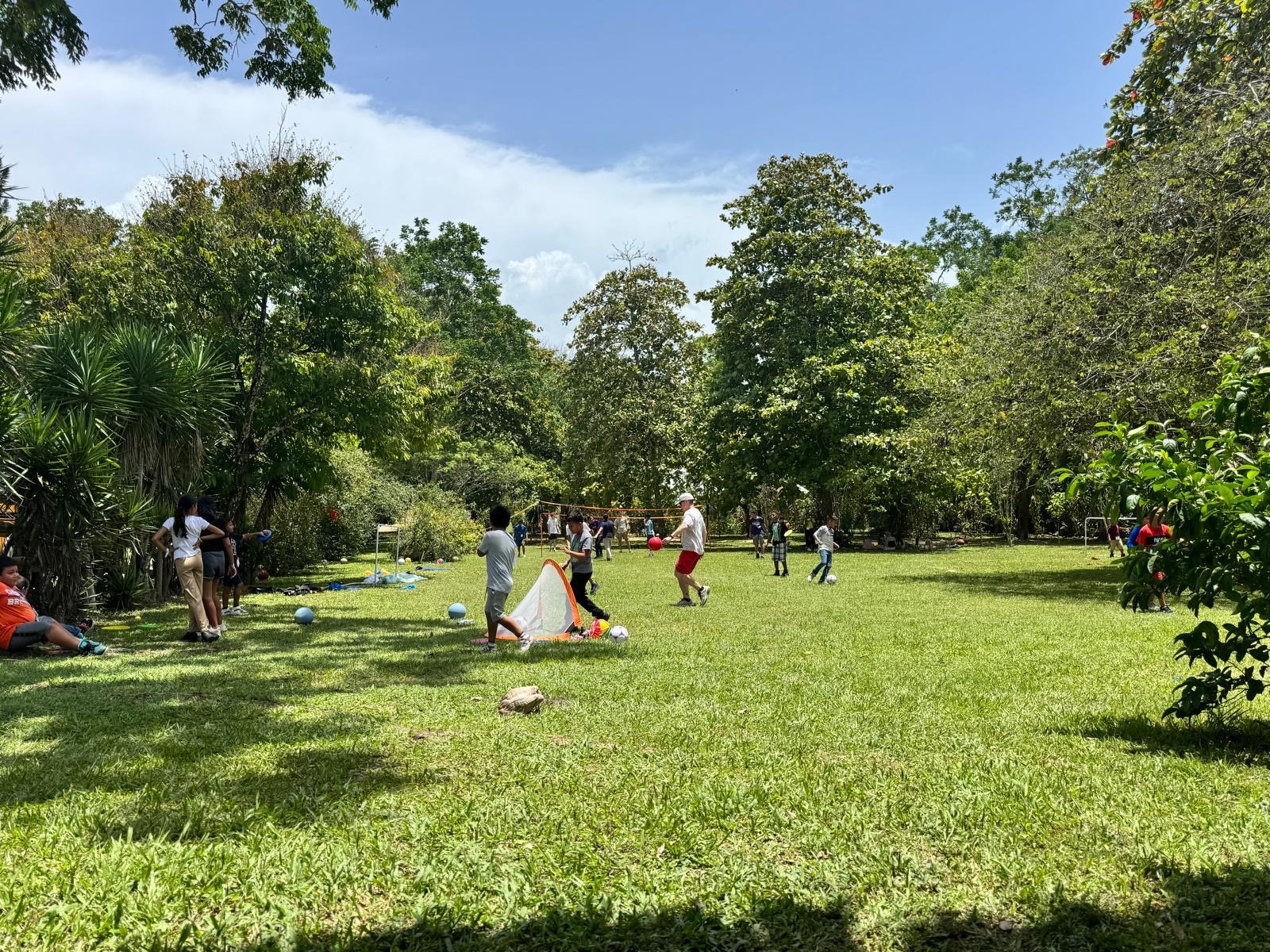
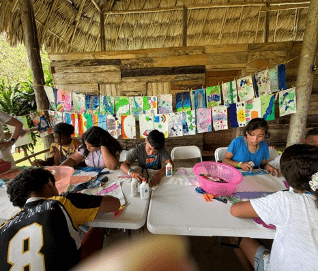
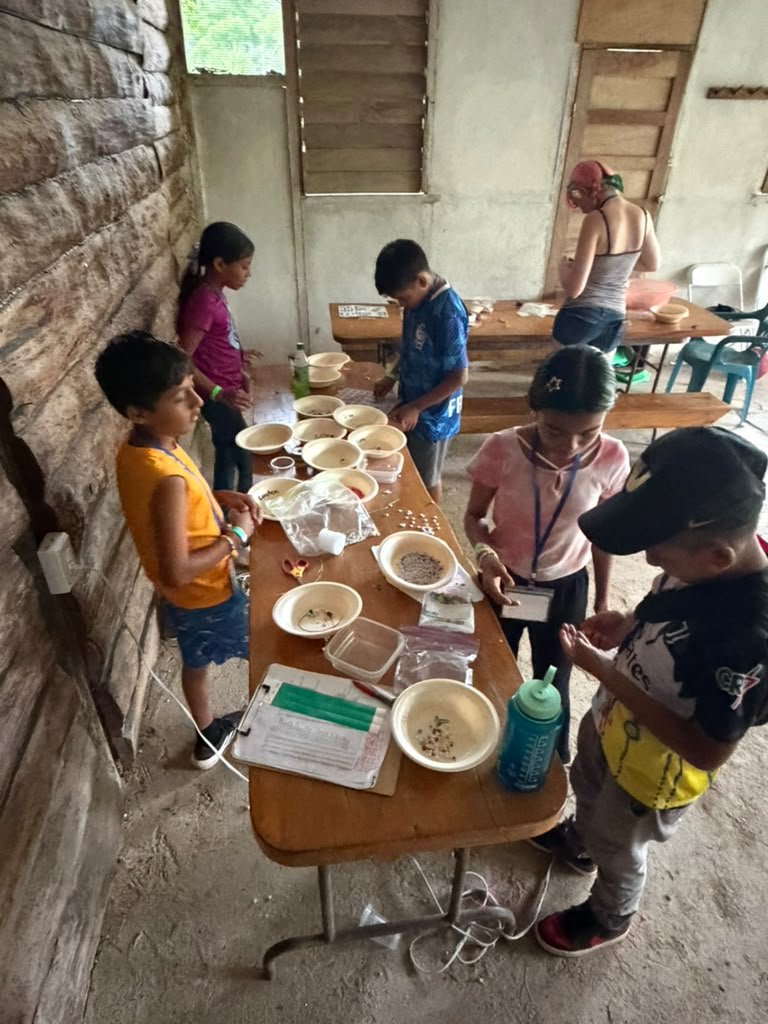
 It was really hot and yet we all kept drinking water. What I was impressed with was the interaction of the counselors with the campers. There were four age groups: 5–7; 8–9;9–11; and 11–13. The campers came from two schools: Holy Cross at Calla Creek, and Mount Carmel in Benque Viejo. The campers rotated between four stations: art, sports, music, and movement.
Peace,
Beth McClelland
Report Written by Keeley Moffatt (Saturday, July 11)
 Seventy-two kids showed up to camp today out of the original 100. A few kids who weren’t signed up showed up and were added to the appropriate groups. There are others that will likely be added tomorrow who were unable to join us due to discrepancies in the bus route and therefore did not make the bus. There were some velcro children, but that was to be expected. (Velcro children are just kids that stay attached to the counselors.) There were no allergic reactions and all but two children ate their food. A bees nest was discovered in the art area by a counselor, and no children were injured. The counselor reported the issue and it is being dealt with. The kids that were there had a good time, if not a little tired by the last station and the bees nest is being dealt with. The camp will definitely be different tomorrow due to the increased number of campers that will be attending.
Peace,
Keeley Moffatt
Reflection Written by Catherine Perrin (Sunday, July 12)
 As they say in the Navy, today is our shake down cruise – we will see what does and does not work. Everyone is full of anticipation and maybe a little angst. We are definitely excited to finally meet the campers. They will arrive around 9:00 a.m., while we will start out for Clarissa Falls at 8:00 a.m. after breakfast.
I think the temperature here is less than in Richmond, but if you can believe it, the humidity is much worse. It doesn’t take much to break out in a sweat, especially in the sun. Today does have a breeze which is immensely helpful.
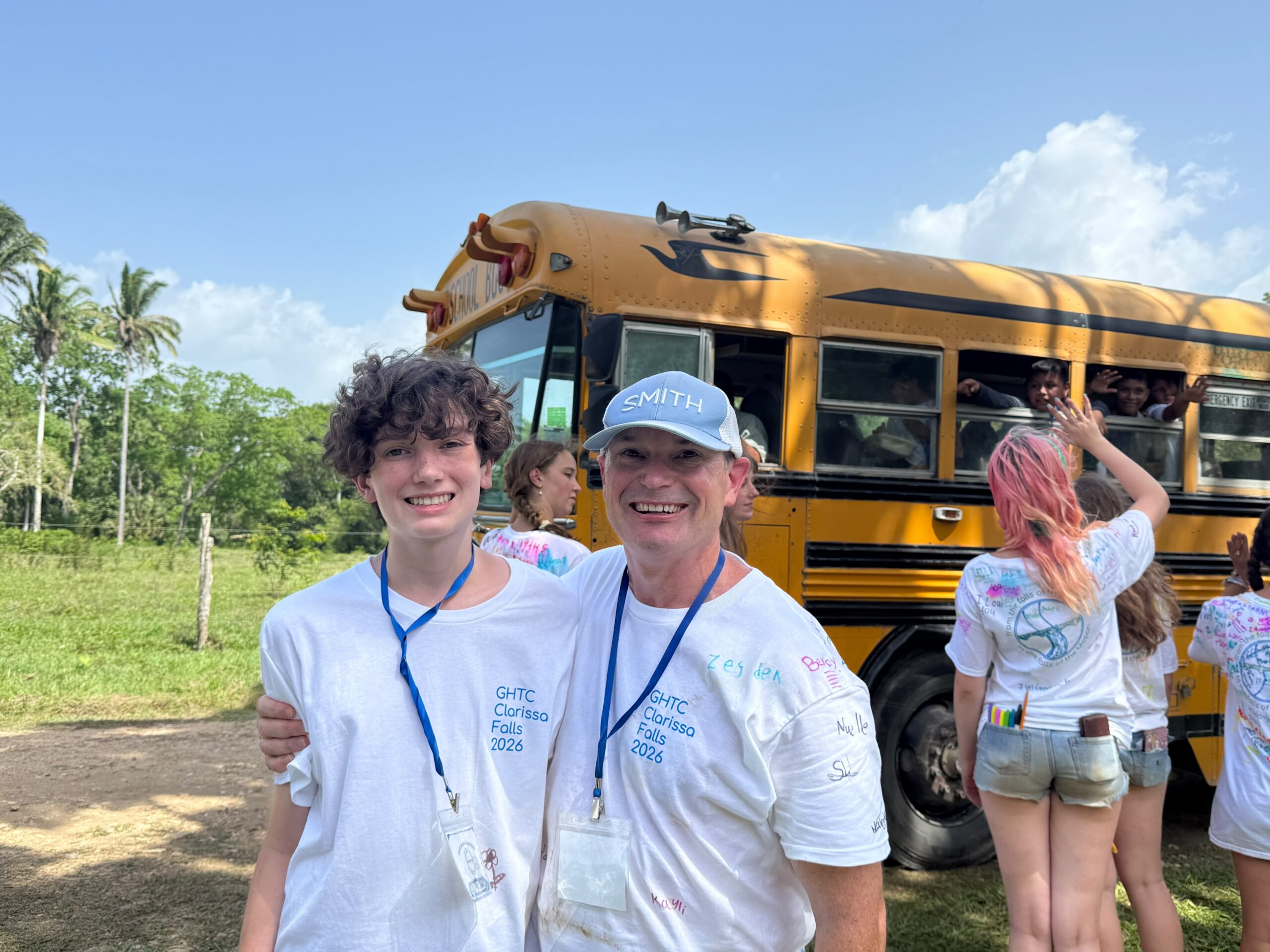
The campers arrived by the school bus hired by our tireless leaders. In my humble opinion, the check-in process went exceedingly well, though some refinements will be installed tomorrow. A big shout out to Amy, Robert, Alice, and Dan for their preparation before our arrival.
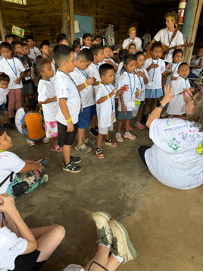
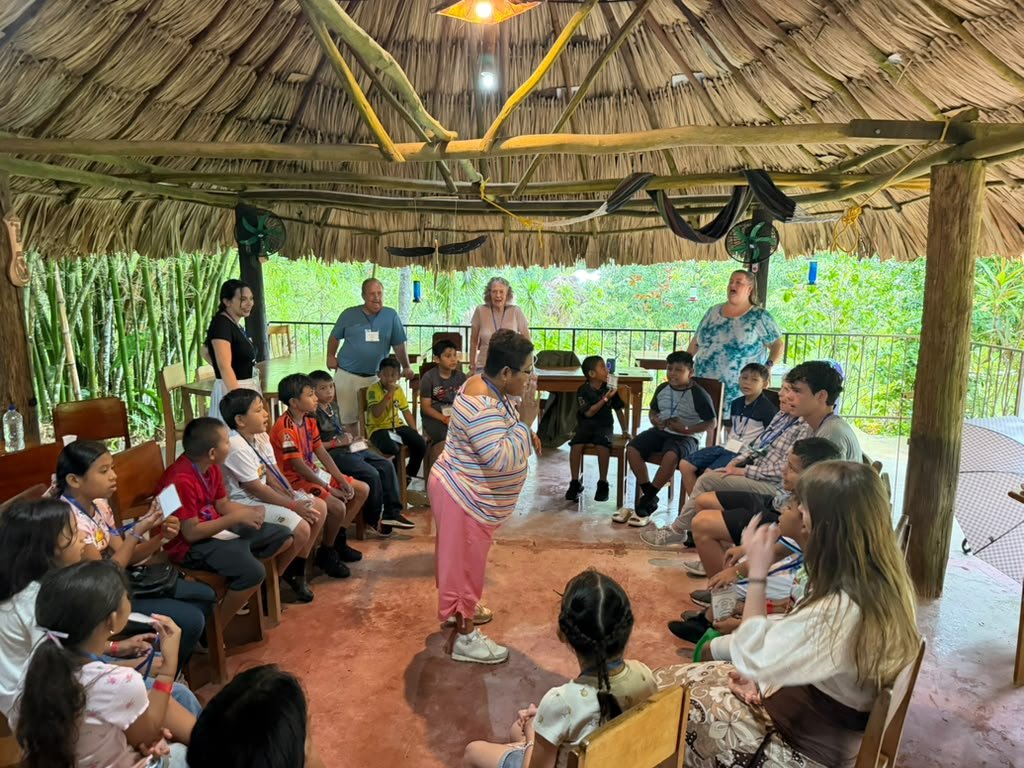
The campers were split into four groups at check-in. After that the youth counselors took over their care. The moment of truth – cultures meet head-on. As always when thrust into new situations, and new faces, there is a little awkwardness, but the counselors jumped right in to ease the anxiety of the campers. The camp is in rural Belize and there are not the activities that are available to kids in even the small cities in Belize. We are the only show in town!
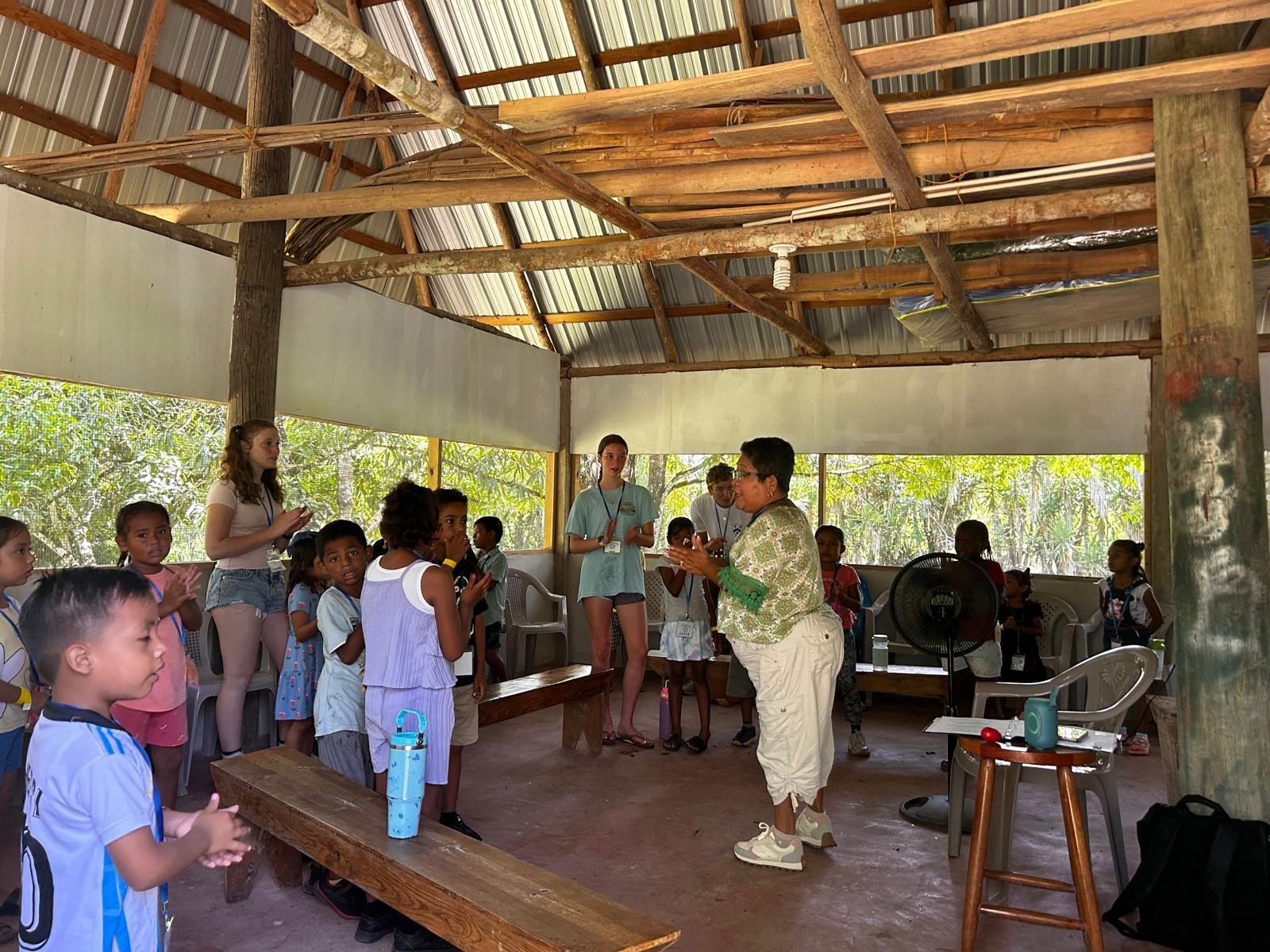
Each group will rotate through four activity stations: sports, movement, music, and art, with a banana break in the morning after two activities, then one more activity before lunch. After lunch the groups will do their last activity and then it is time to say goodbye.
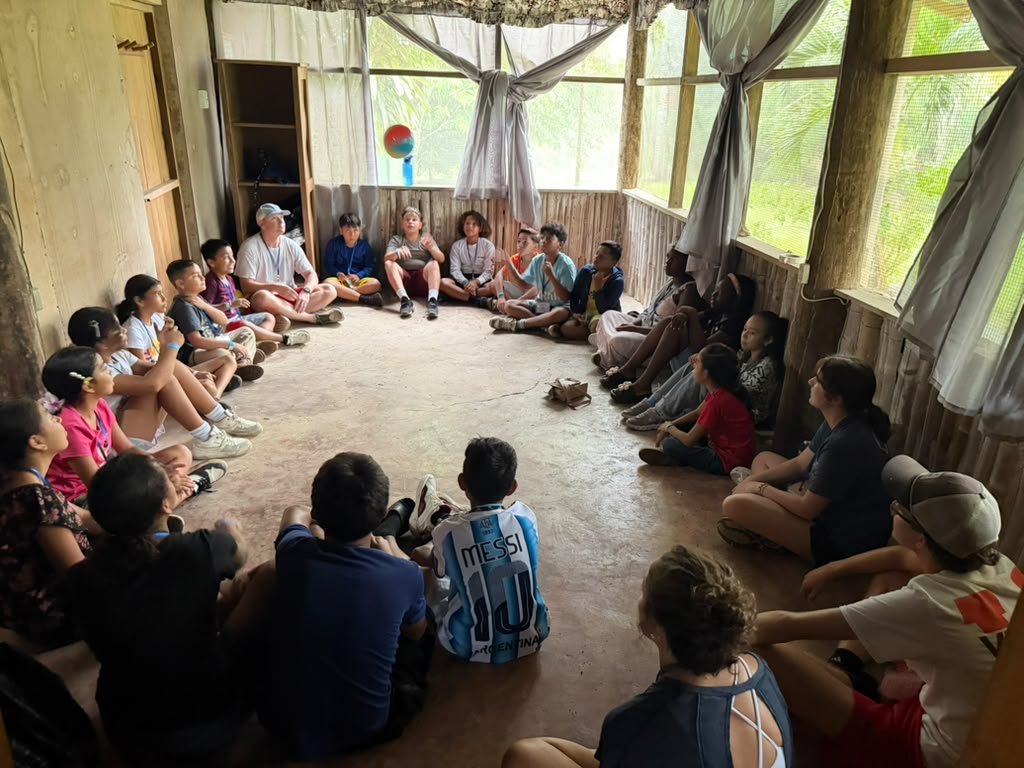
It was definitely a smooth day, maybe a few kinks, but nothing that we can’t fix. We were all tired after the campers left, but what a wonderful group of children. They just exude joy. And, we didn’t lose one camper and there were no serious injuries. What a great day. We ended the day with a reflection time where we explored the highs and lows of the day. We explored how we felt, what insights we might have discovered, with the biggest takeaway from the day being that we may live in different circumstances, but underneath we share the same humanity. The final wrap up was Compline where we all seek the protection of God with the words, “Guide us waking, O Lord, and guard us sleeping; that awake we may watch with Christ, and asleep we may rest in peace.”
Peace,
Catherine Perrin
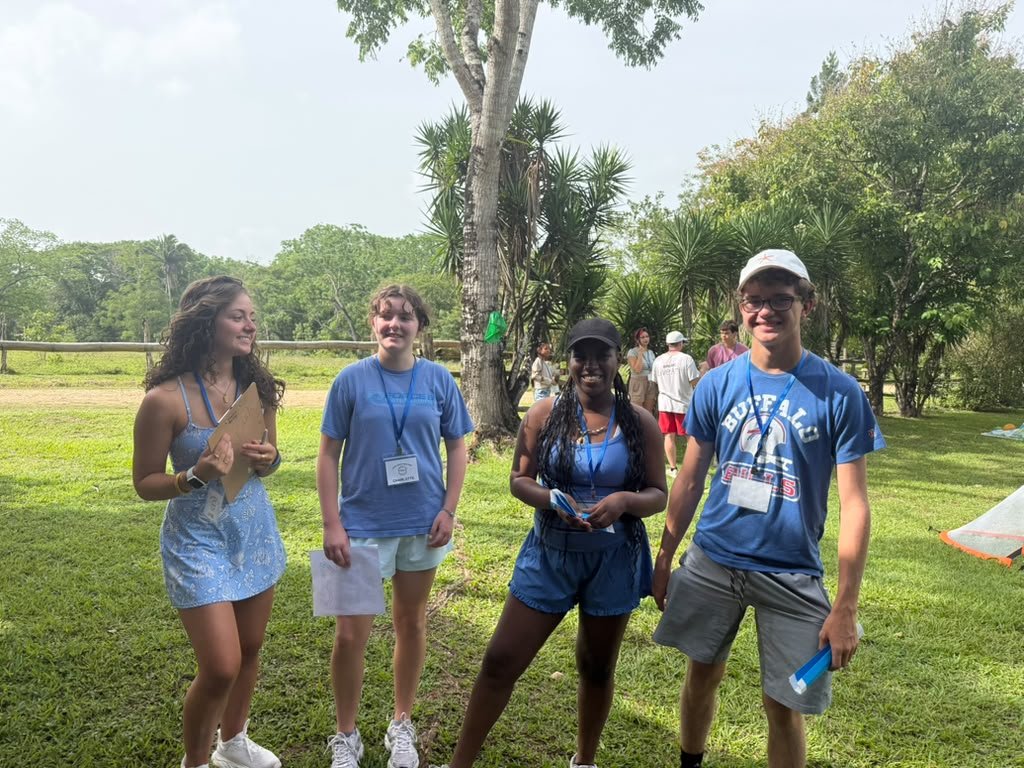
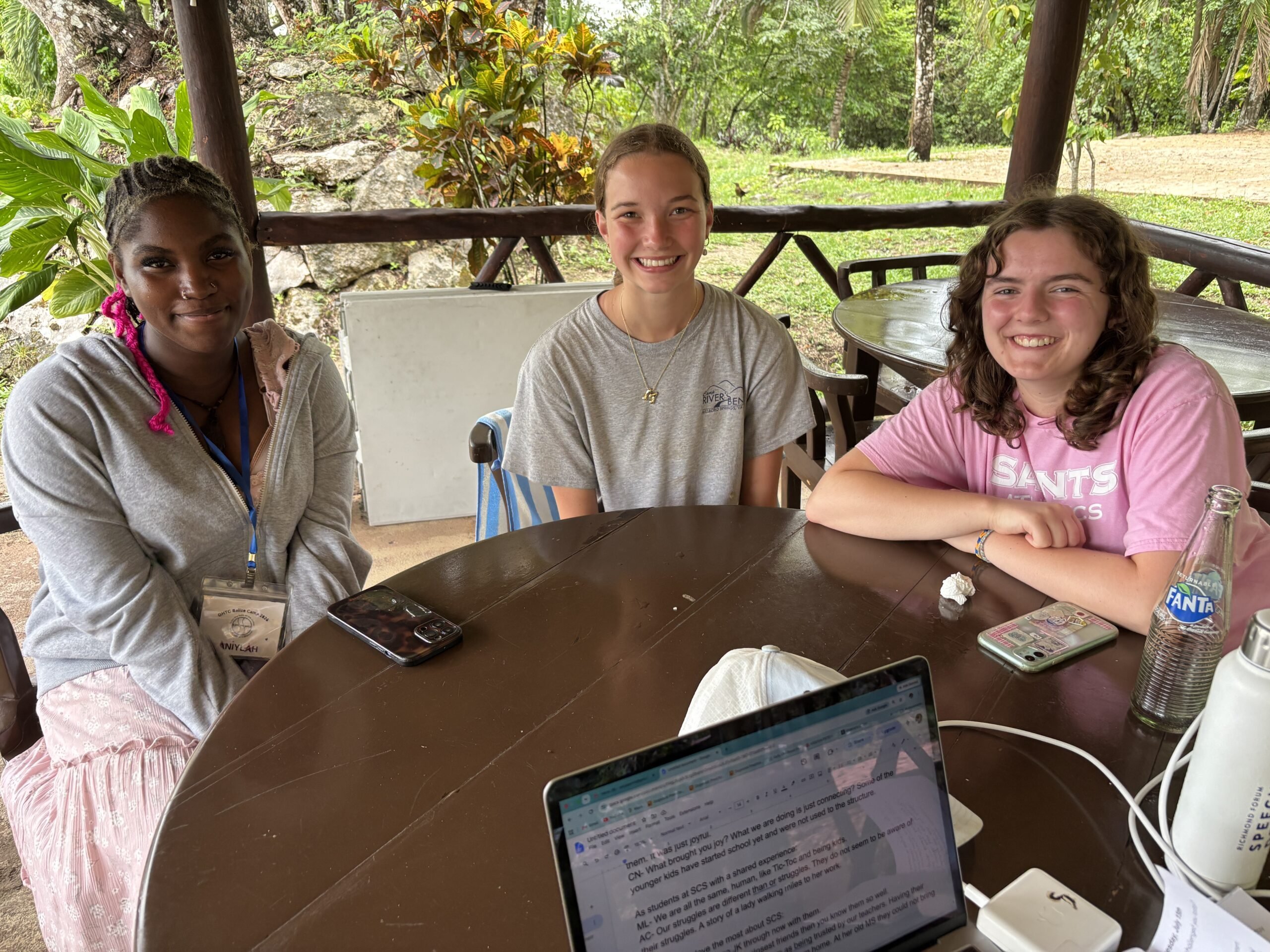
Interview with Students Aniylah, Charlotte & Mary by Father Brent
 Following our third day of camp, I sat down with three students who all attend St. Catherine’s School in Richmond. Aniylah Clarke, a rising 10th grader, Mary Lecky, a rising 9th grader, and Charlotte Nelson, a rising 11th grader. Below is the interview we shared together.
Question: From your perspective of arriving in the country, what surprised you when we first got here?
Aniylah: “How welcoming it was here and quickly it was welcoming. I did not have to work my way into relationships” as the relationships already seemed present here for me. This was in regards to the relationships with the campers.
Charlotte: “I was surprised it was easier than I thought it would be to be a counselor in charge of 18 campers in my group.” She came to Belize with her family many years ago. However this time, “It was a new place in time for her” and she was not sure if she could guide the campers well. She has guided them very well.
Mary: “It was how mature the kids were. Back home kids are not as resilient when getting hurt or trying hard things. Also how the older siblings here naturally step into the role of looking out for their younger siblings. The kids here really do a great job advocating for themselves” and for the younger siblings.
Question: What differences have you seen between the United States and Belize?
Aniylah: “I realized how privileged we are back home to have water we can drink from the faucet and the houses (in Belize) were like huts, small, and not as clean. However the homes have vibrant colors which made me smile with the pop of color.” I asked why the color of the home might be important? She said, “Maybe it is because they can come home to something that makes them feel joyful after riding on the bus.” The color is out of the ordinary. “Also how the schools are different since you do not have to be in school past 14 years.”
Mary: “I feel like back home in Richmond there has not been much change there. Here there are signs of hope within the new infrastructure. It must make them smile.”
Question: Now that we have had three days of camp: one day hot, one warm, and one wet. What have you observed over the three days being together with the campers besides the weather?
Charlotte: “Seeing all of the kids come out of their shells. The campers’ personalities continue to show up more with each passing day.”
Mary: “A big learning experience for me has been the Spanish. Really being patient to understand words and practice the language. Also how attached the campers have become to us.”
Aniylah: “It is really cool how the campers work hard to help us practice our Spanish. They love being able to teach us as counselors something. I feel like it is a two way street: I give to them and they give to me. It helps the both of us because I can now communicate better. I feel like I am part of their family, like a favorite cousin.”
Question: What do you anticipate in the last two days? On the last day the camper’s parents will come at the end of the day to spend some time with us.
Mary: “Will the parents show” the same or different personalities than their kids.
Aniylah: “I want to know more about their culture. What are they used to and comfortable with in their day to day life. The schools being one difference and the punta dance and music. The music is a Caribbean type of beat.”
Charlotte: “I am really interested to meet the parents and their personalities compared to the kids.” All three agreed to this curiosity about their camper’s parents.
Question: Each night we had a reflection time together followed by Compline as a whole group. I asked about that reflection time and what stuck out to them from the conversation.
Mary: “In reflecting on what we have shared with each other, how one positive moment can change the experience for you. I have been in school since age two and I wonder if these kids have any schooling before Kindergarten and what impact that might make later in life.”
Aniylah: “A two way street again. It did not feel like I was working (here).” There was no “bossing around” or “need to scold them”. “It was just joyful.”
Charlotte: She spoke of the question asked: What brought you joy? “What we are doing is just connecting. Some of the younger kids have not started school yet and were not used to the structure.”
Question: Being students at St Catherine’s School, you have a shared experience. What comparisons do you have between your current school experience and here?
Mary: “We are all the same, human, we like Tik-Tok, and being kids.”
Aniylah: “Our struggles are different from their struggles. Yet, they do not seem to be aware of their struggles.” She gave an example an adult shared about a lady walking miles to her work each day and that seemed to be normal as opposed to a struggle.
Question: What do you love the most about St. Catherine’s School?
Mary: “The people. To go to Junior Kindergarten through now (rising 9th grade) with them.”
Charlotte: She agreed with Mary and added how “Even if you are not the closest friends you still know them so well.”
Aniylah: “I like the space and the freedom of being trusted by our teachers. Having their own computers and being able to bring them home.” She shared that at her old middle school they, “could not even bring water bottles.”
Reflection Written by Catherine Perrin (Tuesday, July 14)
 Day Four is coming to a close. Compline has been said and many have gone to bed. Now it is peaceful enough to think about the day. The first thing that comes to mind is that it went well. Many thanks to our prayer partners and the graciousness of God. We didn’t lose a camper and only had a very few minor injuries. Everyone is getting into the rhythm of the camp day.
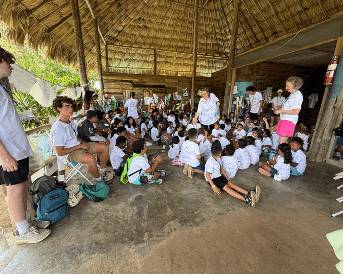
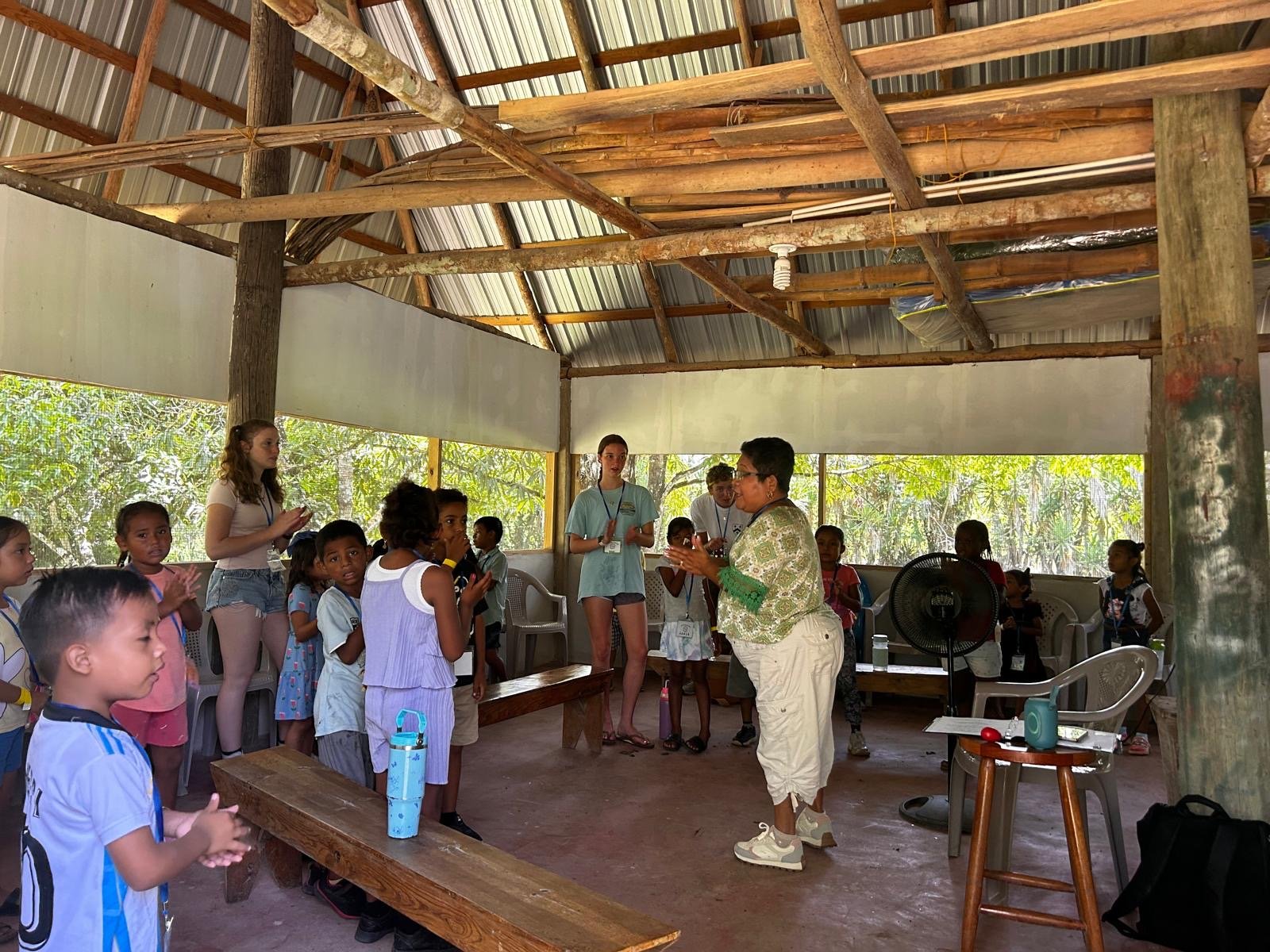
After breakfast, we went to the camp where we started the day with Morning Prayer. Then we set up for the onslaught. I don’t know, but it warms my heart when the bus arrives and the children descend with their smiling faces. The campers come from two different villages and schools. Holy Cross School, located in Calla Creek, is closest to Clarissa Falls and only has about 60 students. Fifty of whom signed up for our camp. The other school, Mount Carmel, is located in Benque Viejo and has about 1,000 students. Another 50 students signed up for camp from there. As you might have guessed from the number of students in each school, Benque Viejo is a small town rather than a small village.
By and large, the day went well. As all children do, they started to push boundaries. Sometimes we would encounter a child that was adrift, but he/she was quickly returned to his or her proper group. Colored wristbands make it possible to easily identify where the child should be. The good news is that we were able to ensure that the same number of campers were checked out of the camp as were checked in.
Hot and tired, we cleaned up the area and made sure we were ready for tomorrow. Then a quick soda and fresh squeezed orange juice break was taken at Chena’s. We loaded the vans, which also had the right number of missioners, and away we went to our Log Cab-Inn.
Peace,
Catherine Perrin
Reflection Written by Catherine Perrin (Wednesday, July 15)
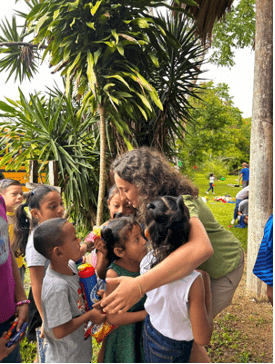 It is Wednesday, day five of our mission to Belize. As the day is coming to an end, I am struggling to put it in perspective. To put it bluntly – it poured down rain. Now to the diehard soccer fans, Will Herlihy and friends, the rain was just something to play through, but to the rest of us, it just added to the drama of the day. Adjustments to the location of music and movement had to be made to keep them out of the rain. We all muddled through. I am not sure how the mothers felt when their children returned home wet with shoes covered in mud. It is the beginning of the rainy season here.
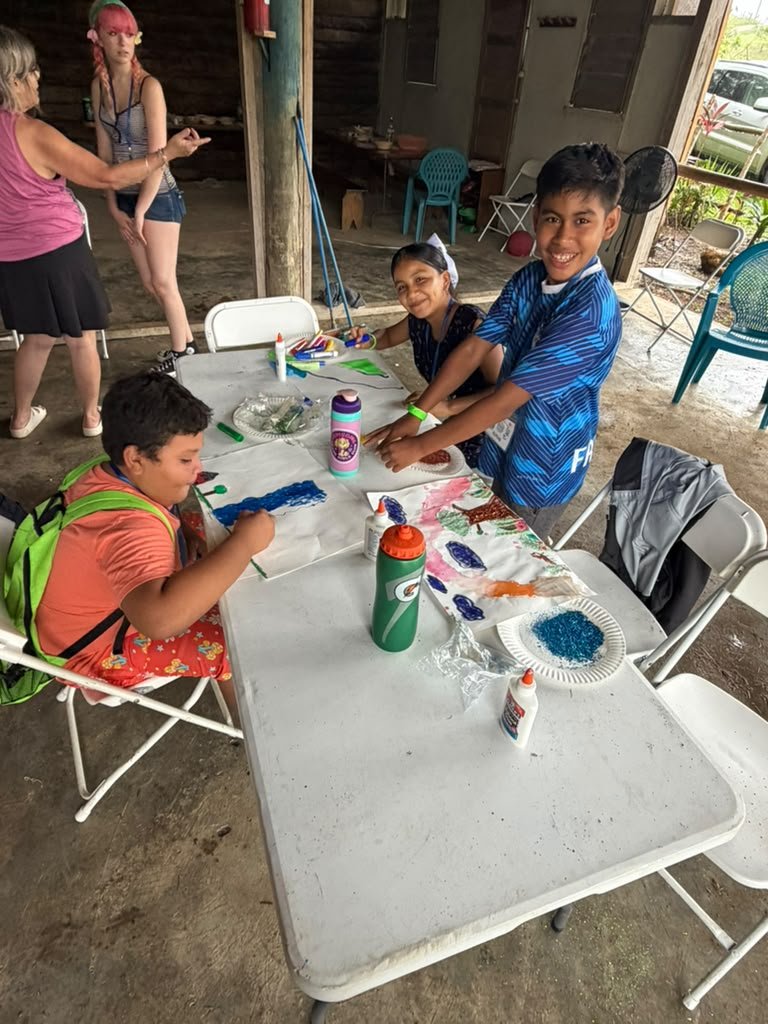
Now I make these next comments from the perspective of someone who is not a free spirit when it comes to children, glue, and glitter. Amy, our leader in the art department, is a free spirit, and gave the children a free hand to use as much glue and glitter as they wanted. The children loved this chance to be extravagant with the amount of GLITTER they could add to their collages! After clearing it with Amy, and giving my word I would be back to clean up, I ran to Music where I could free my spirit from glitter, join in playing musical chairs, singing, dancing around, and being silly. Amy, thank you.
The rainbow to the rain was that without the sun beating down, there was not the same degree of exhaustion at the end of the day. And most importantly, the same number of campers left by bus as came by bus. Thanks be to God.
Peace,
Catherine Perrin
Reflection Written by Catherine Perrin (Thursday, July 16)
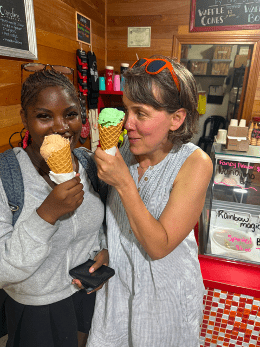 I knew it would be a good day today because there was papaya for breakfast. I don’t normally eat breakfast, but when I saw there was papaya, I changed my mind. As was pointed out to me, I didn’t have to eat the rest, I could make some growing young men very happy by sharing it with them.
Waiting to load up for the day, the sky opened and it poured. There was a bit of a collective groan, but on our way to camp, it stopped and we were blessed with a rainbow. And the tone of the day was set. The campers arrived electrified. We got six new first time campers. The number of campers per day has fluctuated, but has remained around 75. We had a birthday girl for whom we sang the Belizean version of Happy Birthday which is a little different and more extensive than ours. And we were off for a great day. You will be happy to note that once again the same number of campers left as arrived.
It was definitely more humid today and with the sun, we were more tired. The campers’ energy remains high. The two schools have blended well and all have bonded with their counselors. Though I think today the counselors might have flagged a little on the inside, the outside showed no such thing. Kudos guys.
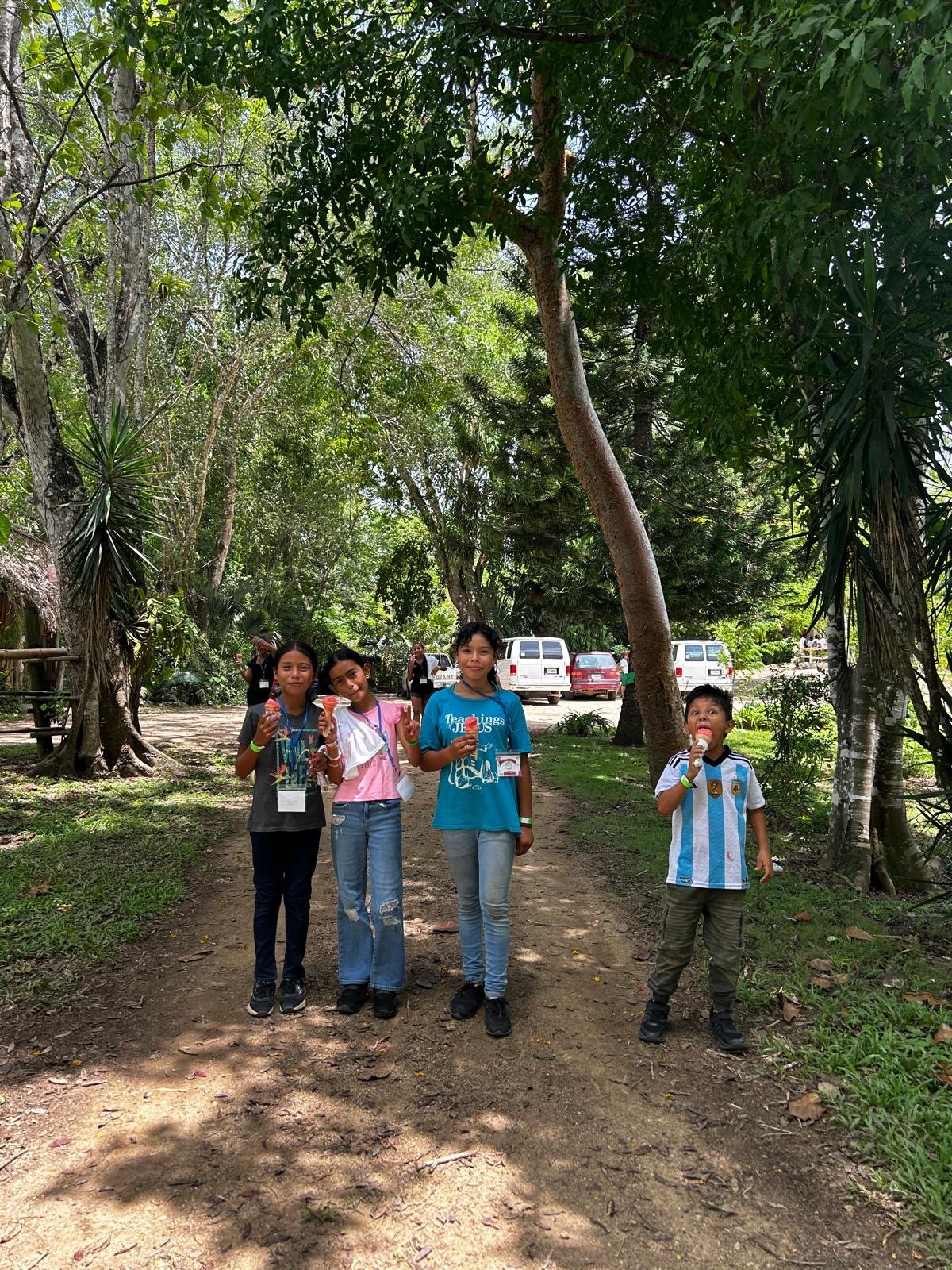
We did something different after camp and went into the town of San Ignacio for ice cream and to walk around. Luckily when the skies broke open with a torrential downpour, we were under the cover of the ice cream shop.
The day ended with dinner, reflection time, and Compline.
Peace,
Catherine Perrin
Reflection Written by Catherine Perrin (Friday, July 17)
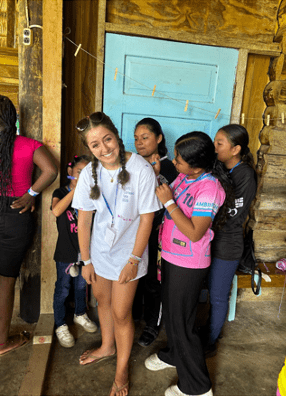 Today is the last day of camp. It started out gloriously for me because even though I wasn’t going to breakfast, Chuck Ashjian knows I love papaya, so when the breakfast was served and it included papaya, he collected papaya from everyone who didn’t want theirs and brought it to my room. How could the day go wrong after that?
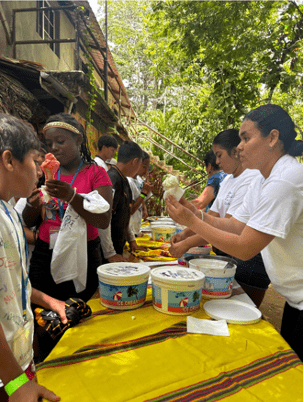
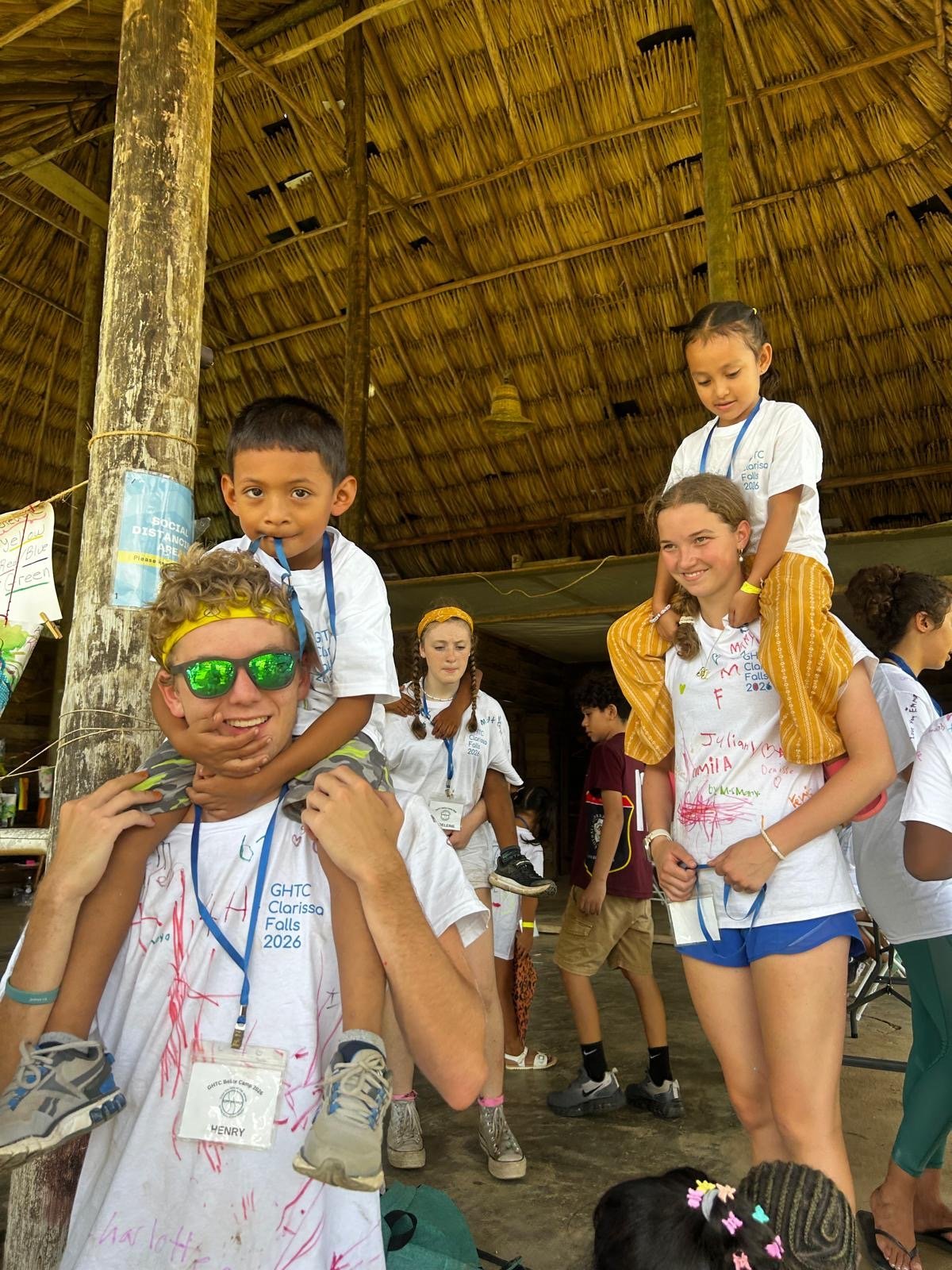
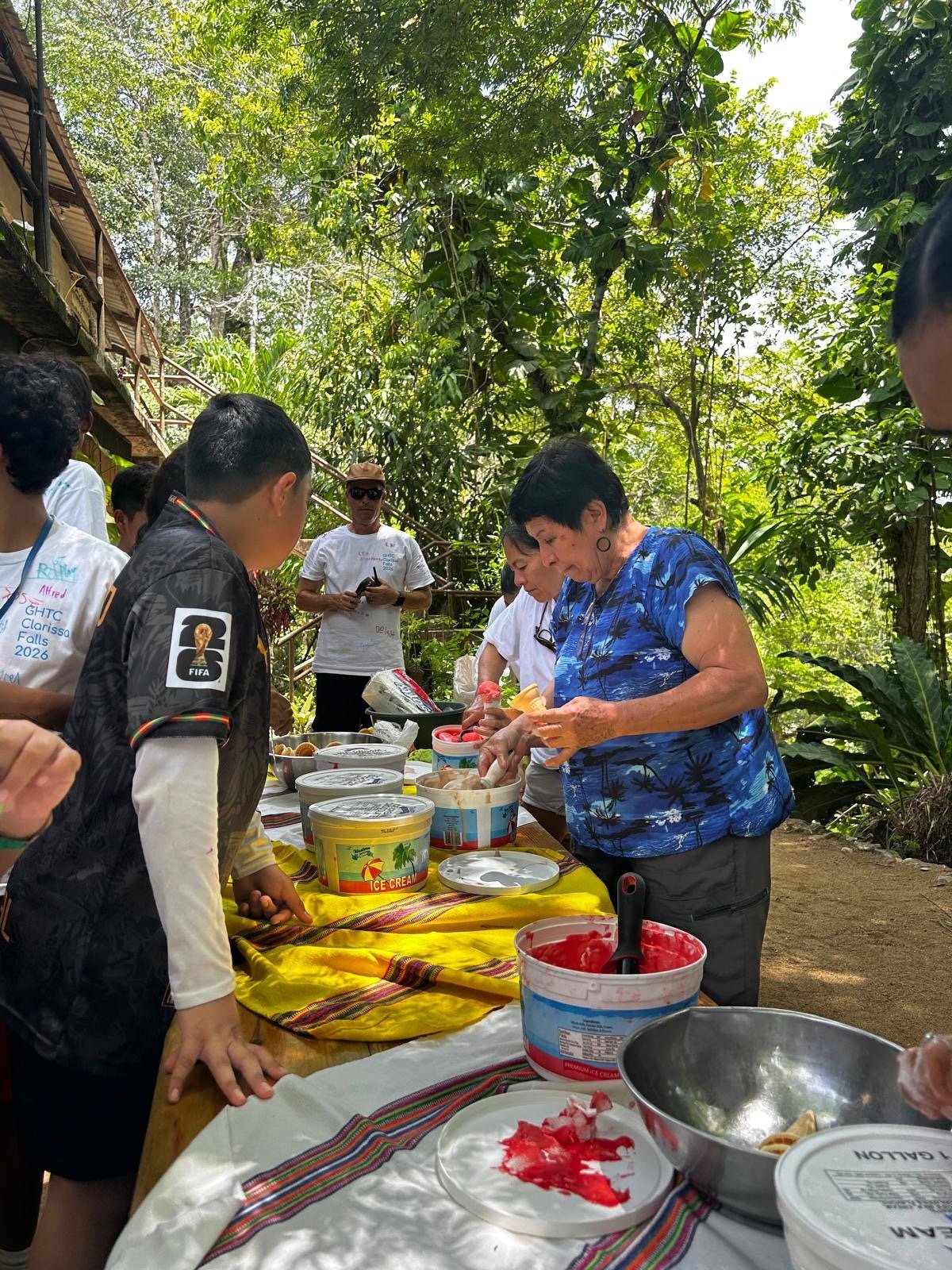
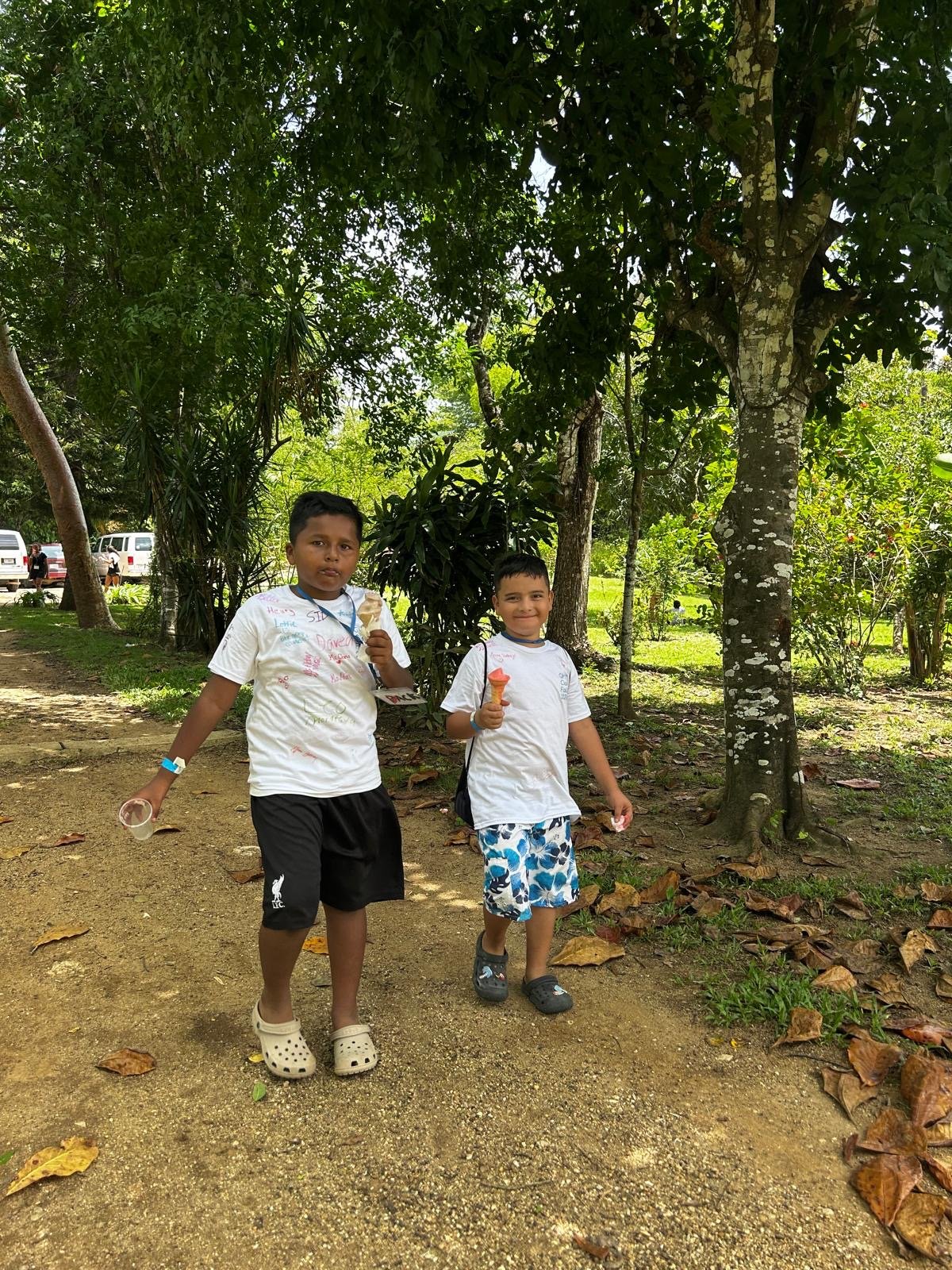
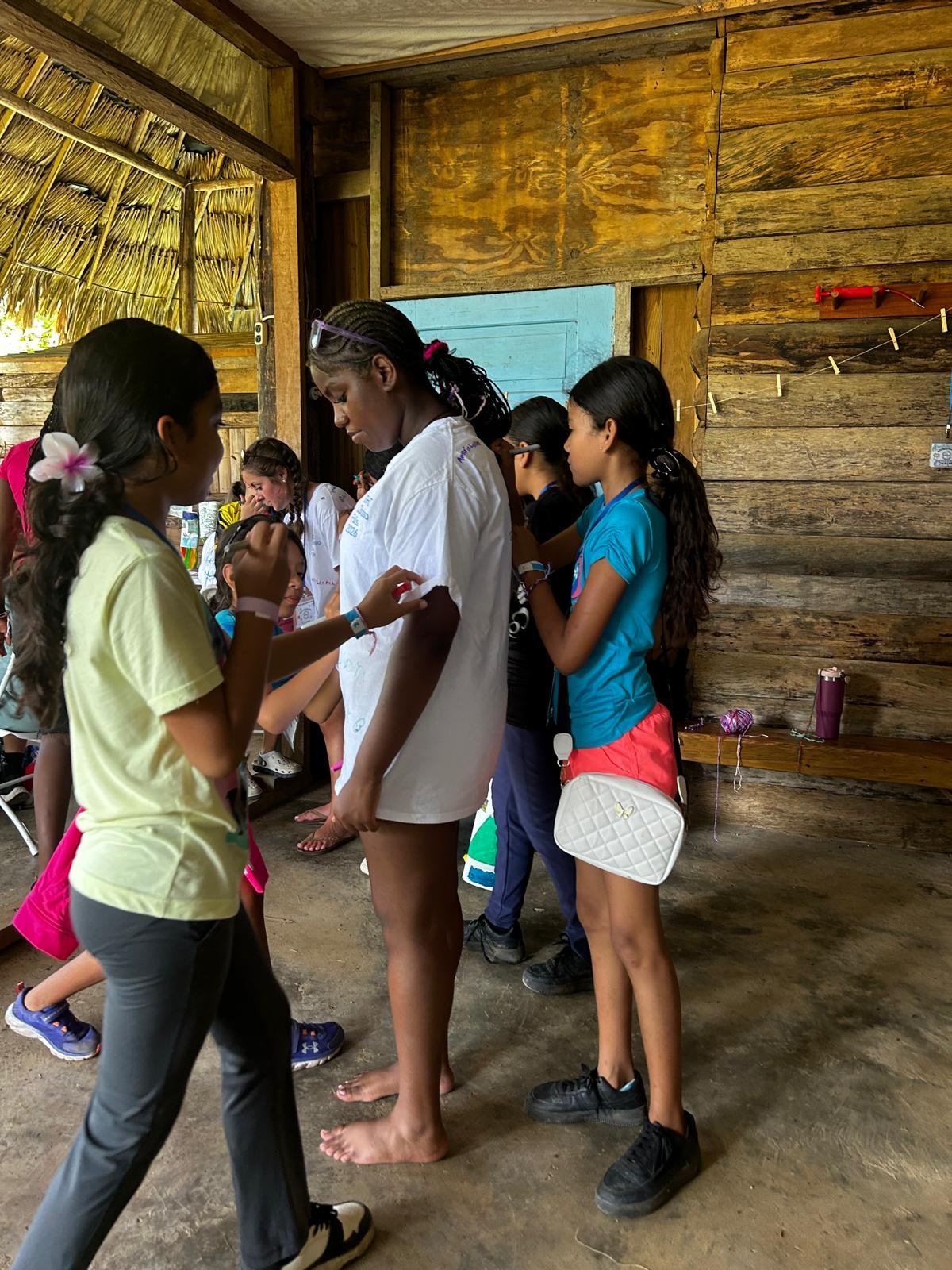
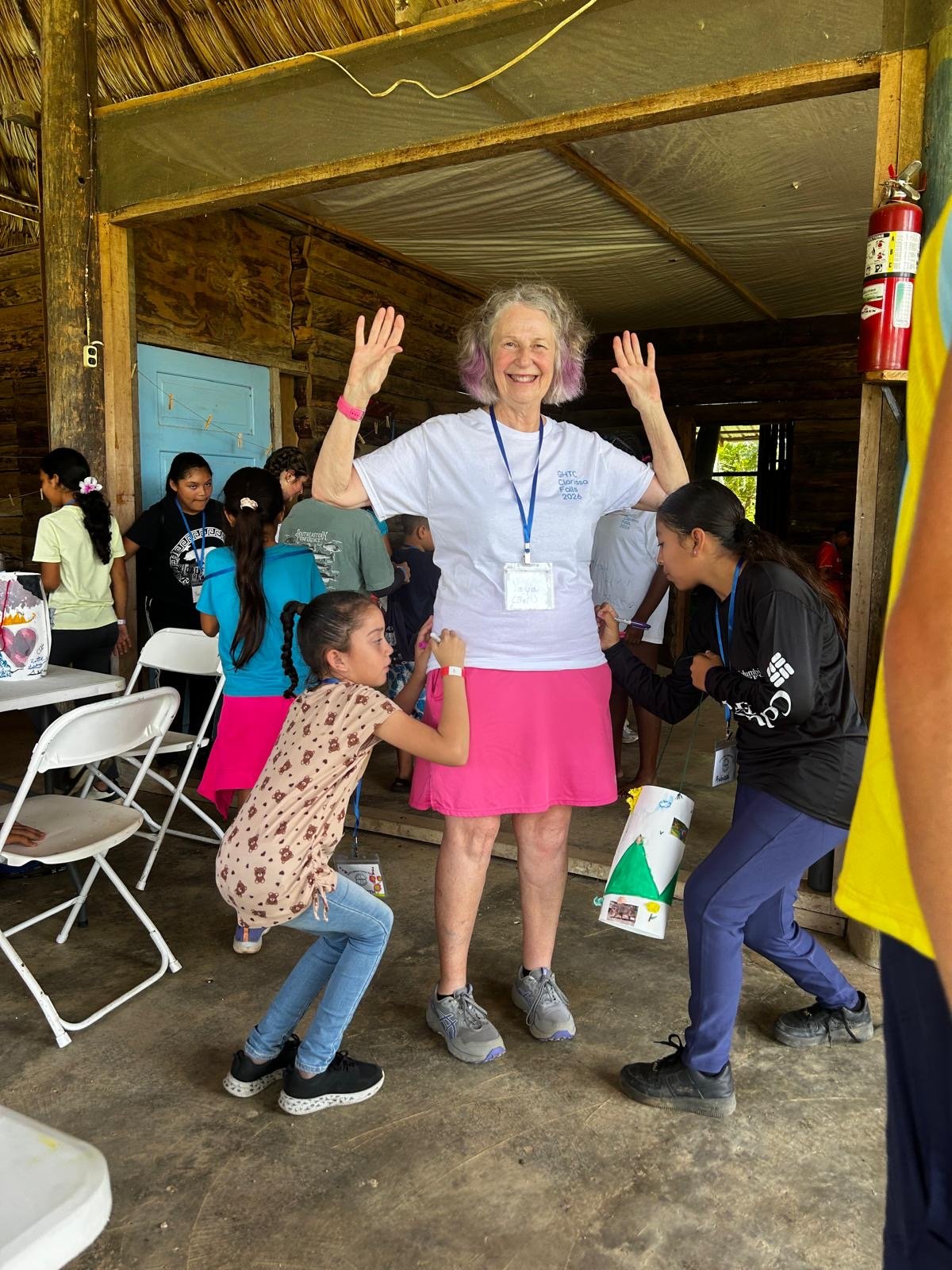
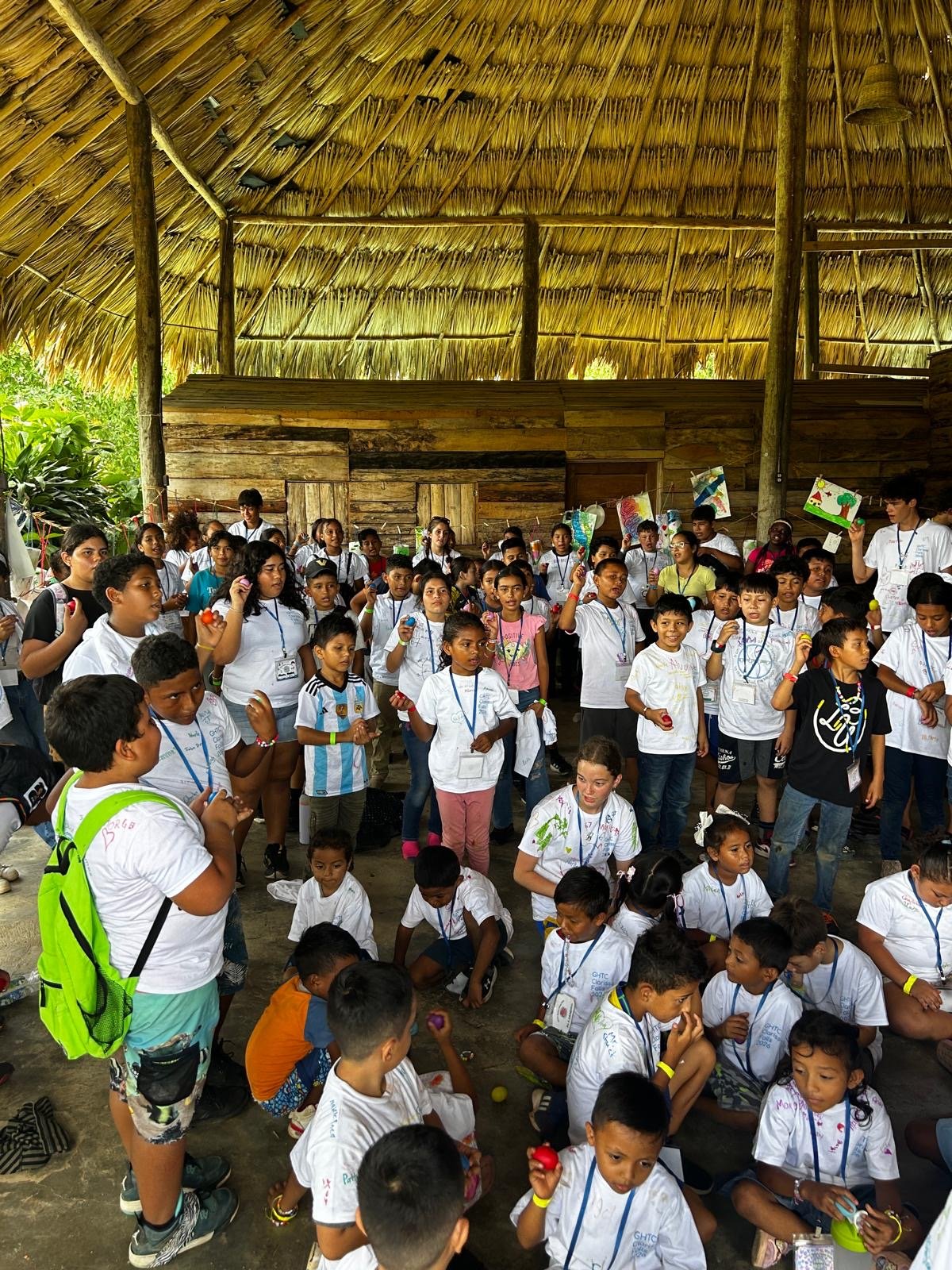
We left for camp a little earlier to get ready for the water balloon fight scheduled as the culmination of the week because it takes time to fill all those balloons. Sessions were shortened to allow time for distributing tee shirts to the campers, signing said tee shirts, ice cream cones, the music performance for the parents, and the aforementioned water balloon fight.
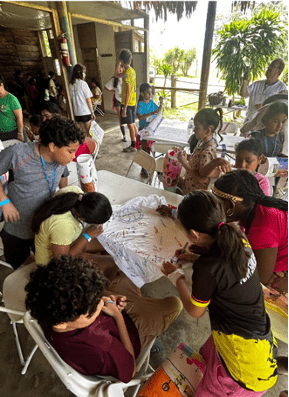
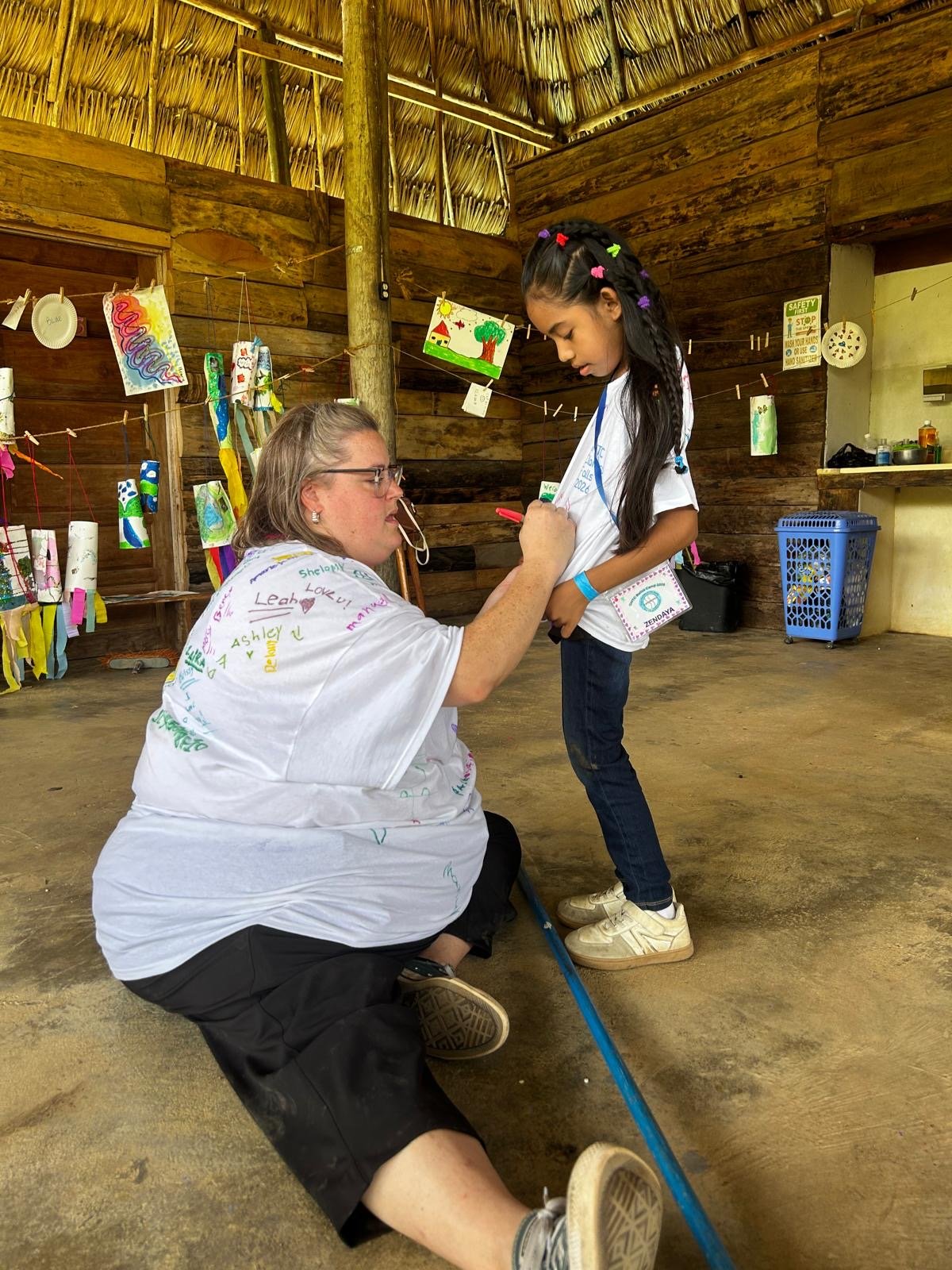
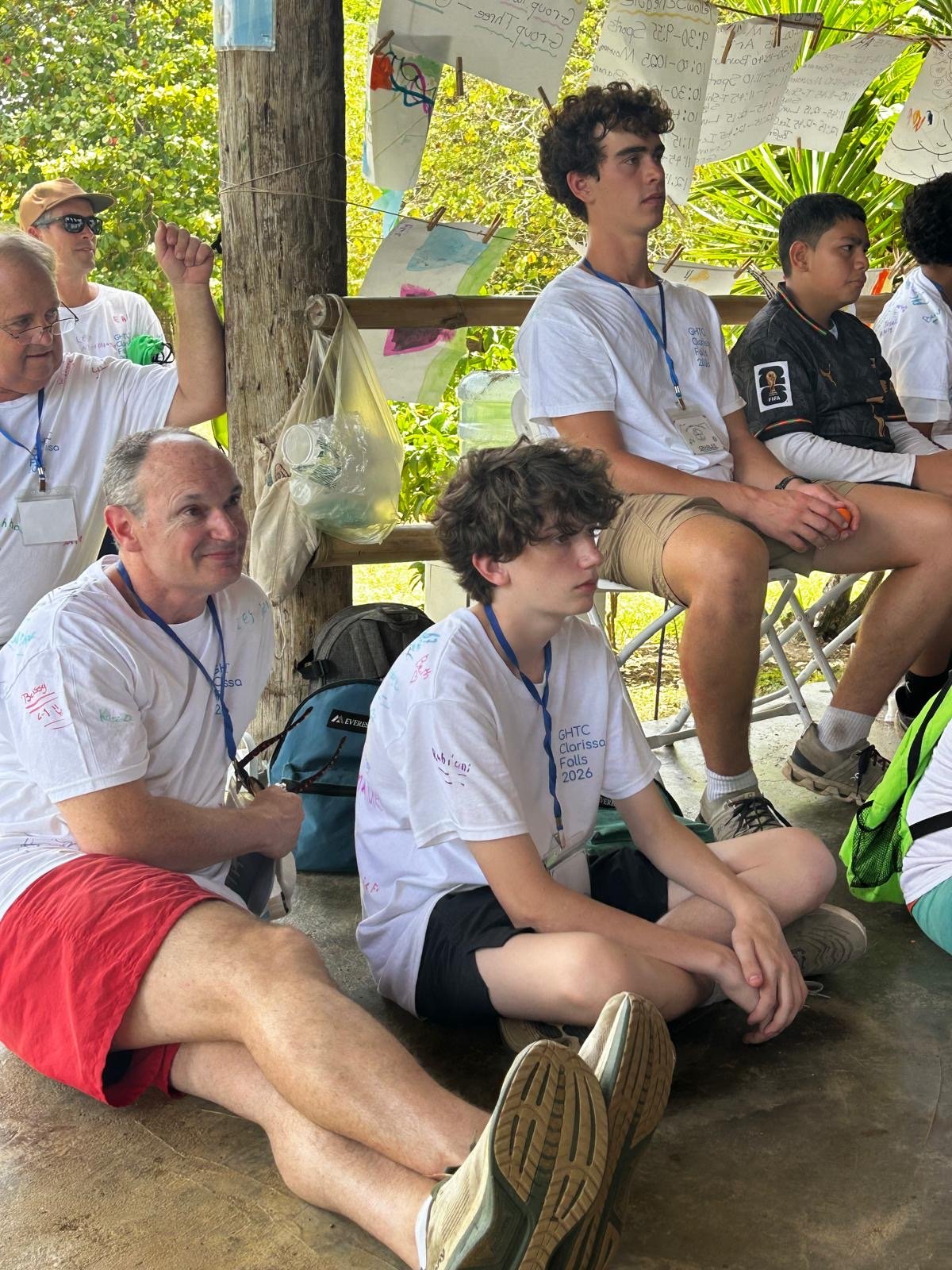
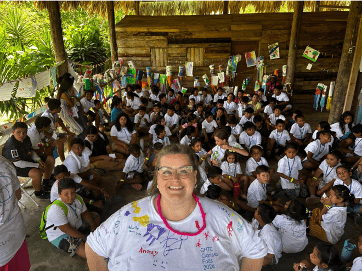
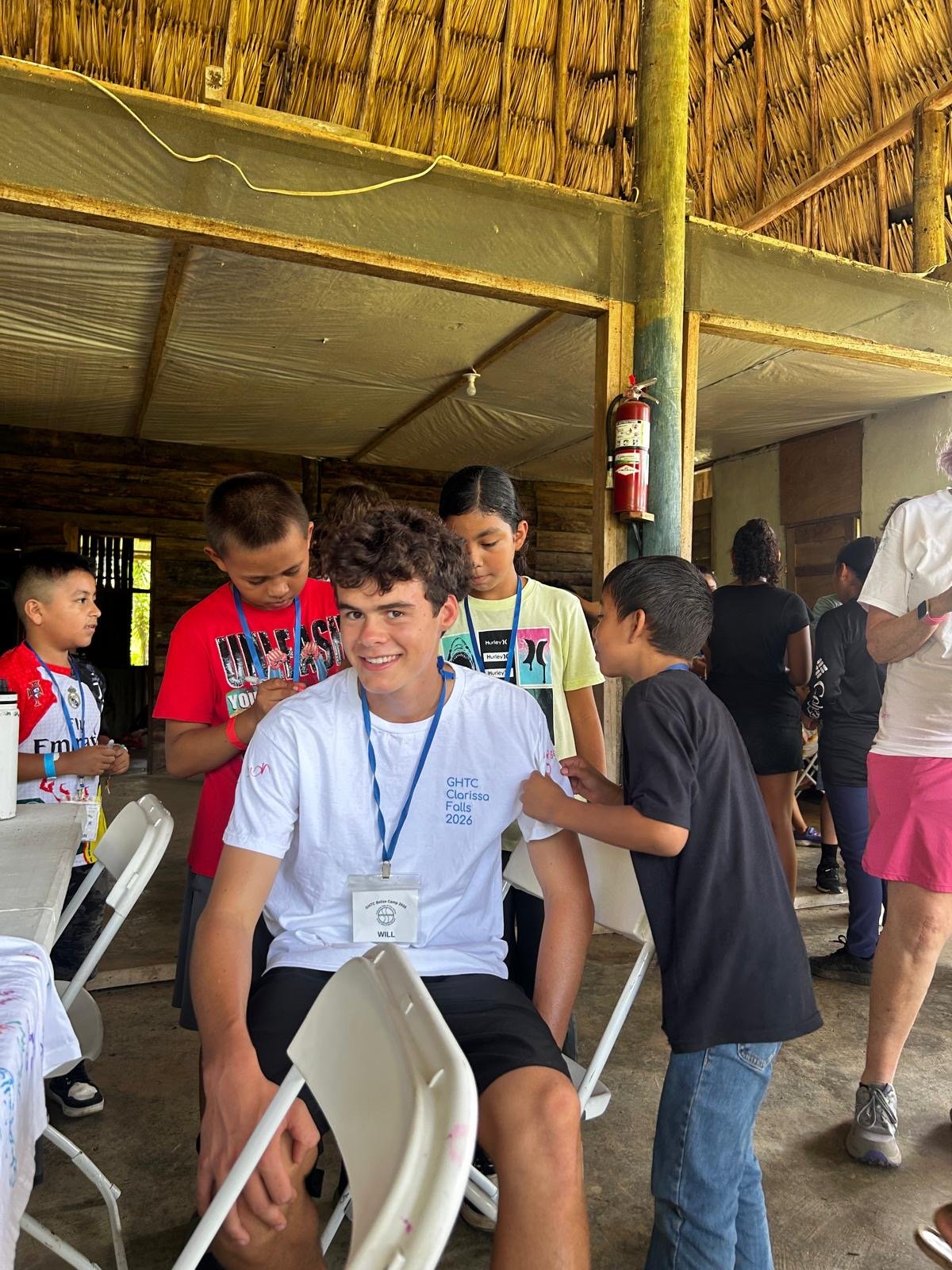
Upon the distribution of tee shirts, the campers and staff, armed with sharpies, were free to sign the tee shirts as visible memories of their time together. I must say that everyone was very respectful and polite — asking first if they could sign the other person’s shirt.
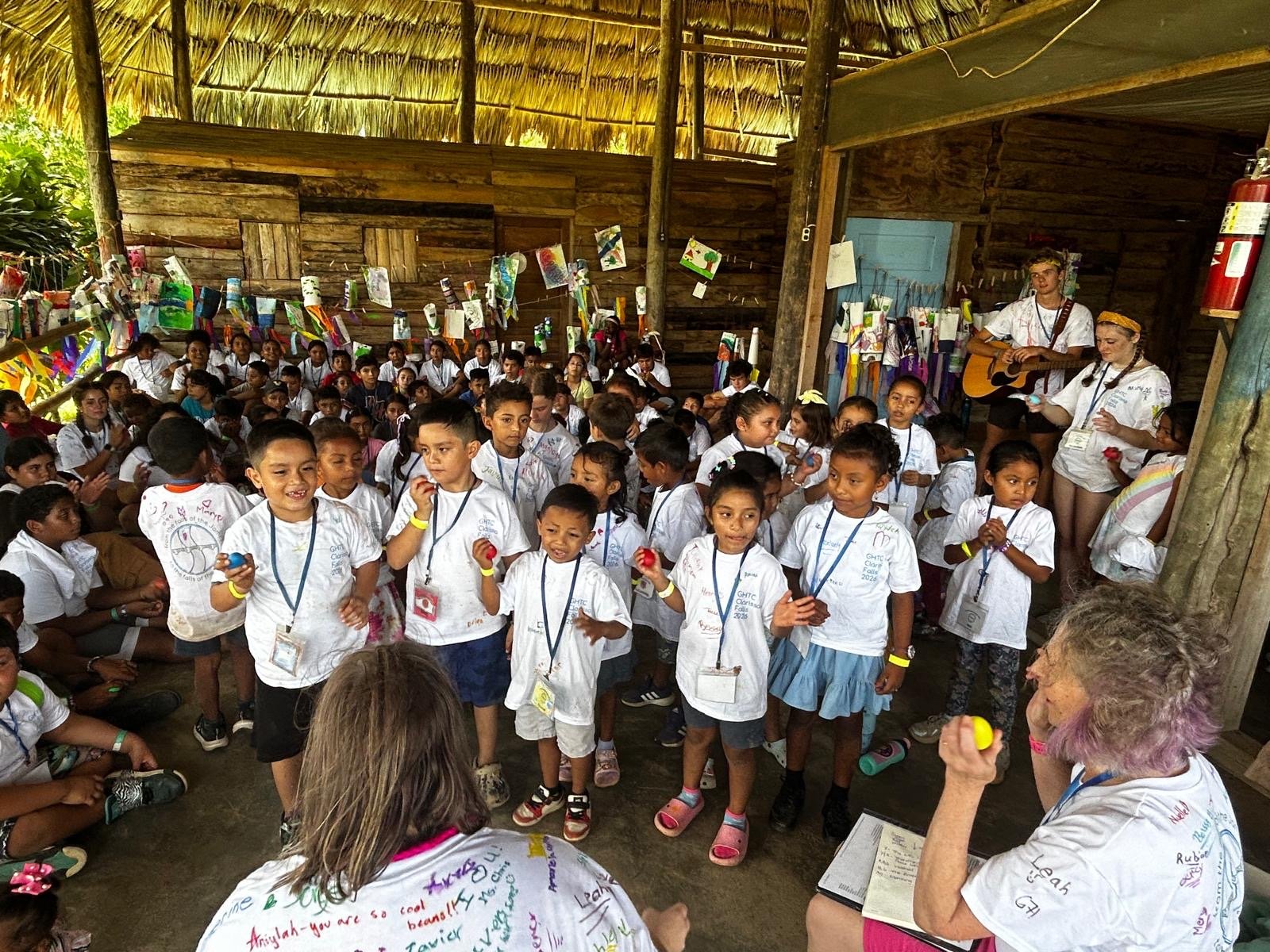
The parents were invited to join us at camp at 1:00 p.m. to watch their children perform the songs that they learned throughout the week. A learning moment for us came when the bus arrived in the morning with many of the mothers on it. There was a bit of a scramble to make sure that all the additional children and parents were included in the count for lunch. It was a wake-up call for us to remember next year this would happen because there is no other way except for the bus for the parents to get to camp. As always Chena (the proprietor of Clarissa Falls) was able to accommodate the increase. As a point of information, Chena knows that many of these families struggle to put enough food on the table, so she always tries to feed them something that they will like. If they do not eat it all, they will take the remaining food home. The treat for the day was an ice cream cone.
The children’s music performance was received with much enthusiasm. Everyone, campers included, enjoyed the songs. Kudos to Abigail and her team for making this happen. I am told that the children would sing the songs they learned all the way home on the bus.
Finished with their performance, as promised, the water balloons were brought out from their hiding place. And the fun began. Who does not like a good water balloon skirmish? Then for the final time, the same number of children that arrived on the bus left on the bus.
With much sadness at their departure, all that was left to do was to clean up and pack away those items left for next summer. We also packed up school supplies brought with us to give to the principals of the two schools that participated in the camp.
Peace,
Catherine Perrin
Interview with Students Sidney, Charles & Will by Father Brent
This reflection is my interview with Sidney Hetherington, Charles Herlihy, and Will Herlihy. These are three cousins. Two of them attend high school in Richmond (St. Christophers and Steward School), and Charles is an incoming freshman at the University of Utah. You may remember that Charles gave the senior sermon two years ago at GHTC. I sat down with them during our layover in Miami on our return trip from Belize. I hope you enjoy their insights on the last two days of the trip.
 Question: What impacted you the most during the last two days of our Mission Trip?
Will: “The closeness between the campers and myself grew a lot. Also watching the campers become better friends even if they attend different schools. I was asked the repeated question if and when they (campers) might see us again.”
Charles: I was “impacted by the campers excitement to be at the camp. Knowing what our own summer camp experiences look like for us, to the campers this time was ideal and a favorite moment of their lives. [We also were] seeing the advantages of our life experiences as compared to these kids.” For example, “The kids would say things like the food here is better than the food we get at home. This has been the best for them.”
Sidney: “Observing the growing connection between the two schools in general. It was not a competitive (school) aspect but a strong connection from this shared experience.”
Question: As young men, how did the connection feel for you having kids crawling all over you?
Will: “It felt very good and brought a lot of joy” that even though we have “no clue what their life was like beyond the mission camp [we got] to see them so happy.”
Charles: “It felt fulfilling in a way to have such a strong and positive impact on them.” I hope that “they might remember the fun at the camp in regards to the other school students in the area” who missed this experience.”
Sidney: “Knowing everything that I have done is for the greater good. It is not just to get service hours (a requirement from many high schools) but something that is truly special.”
 Question: What emotions did you experience in the last 30 minutes on Friday when the last camp day was coming to a close?
Will: “I felt sad especially when they asked if we were coming back. We just do not know what will happen in future years. This was hard.”
Charles: “I agreed with Will, I felt sad that we were leaving.” Yet “I felt thankful for the opportunity to connect with them. It made me grateful for all the opportunities I have at home.”
Sidney: “Sad obviously, because of the connection with the kids,” and I was also “feeling nervous about what the rest of their summer might feel like, being only the second week of summer.” (Children in Belize just finished their school year at the end of June.)
Question: In our reflection times at the end day, was it easier to reflect more as the week went on?
Will: “Yes, as you hear other people’s perspectives in our (American) group it makes it easier.”
Charles: “Whenever you go into a new space and are asked to reflect, it is hard to give your full perspective. I felt like it grew as a safer and safer space to share together with each passing day.”
Sidney: “The shared connection of our camp stories made it enjoyable to reflect together and know others were there doing it with you.”
 Question: What has it been like going from a Third World Country to sitting again in the USA?
Will: “It is definitely a shock.” On the way to the airport “so many buildings have been abandoned along the road. Now we are sitting in a huge airport (Miami) making it feel like a huge shock.”
Charles: “I see it as the opportunities we have (in the States) while a lot of the world lives in a place where they do not know where their next meal might come from or a way to wash their clothes. A lot of people here (USA) have a car to drive and a stable roof over our heads.” Now “having clean clothes is noticeable to me.”
Sidney: I’m “appreciating everything we have. One thing we do not have to think about (in the States) is drinking water. We have so many things to be thankful for.”
Thank you for reading this reflection and we look forward to sharing more with you at church in the months ahead. I was really proud of the leadership and growth, especially in our youth, over this week. I am also grateful for the adult leaders. A special shout out to Alice and Dan Herlihy and Amy and Robert Nelson who have worked tirelessly for a year on organizing and creating this experience for the 26 folks who went to Belize. Blessings!
In Peace,
Father Brent
Culmination Reflection by Alice Herlihy
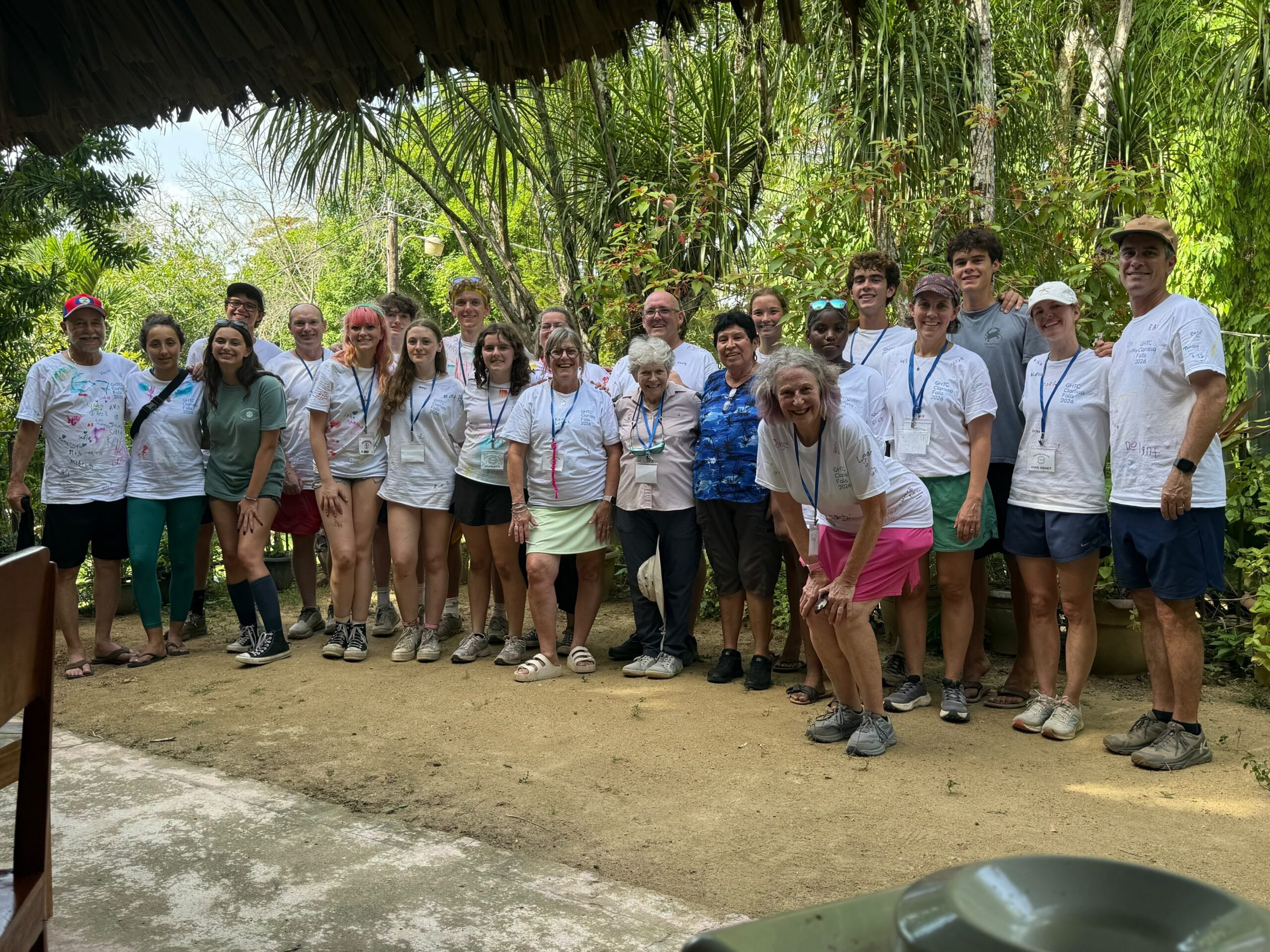 It has been three days since the GHTC missioners returned from Belize and a year since trip planning began. It is hard to believe that GHTC Belize Summer Camp 2026 is complete. It was a whirlwind of joy, play, service, laughter, sweat, teamwork, gratitude, and worship. I am thankful to the Belizeans who welcomed us, to my fellow missioners for their generosity and friendship, to our GHTC “home team” supporters, and to Father Brent for his spiritual leadership. In our original proposal to the Vestry, we laid out two lofty goals – #1 change the trajectory of the lives of the children we serve in Belize, and # 2 build community among the members of our GHTC church family by working together toward a common goal. I am not prepared to say, “mission accomplished,” but there is no doubt that God’s work is in progress!
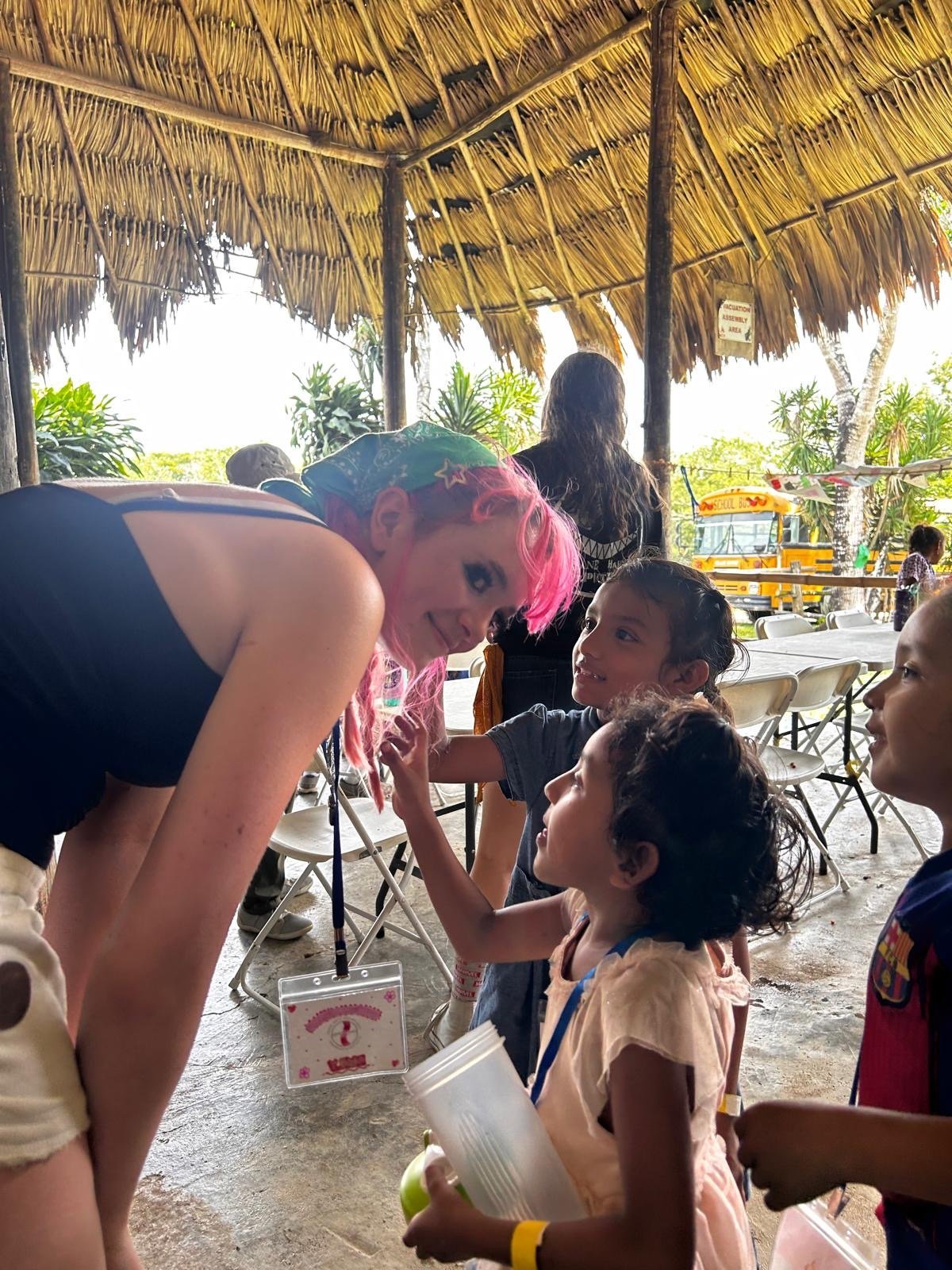
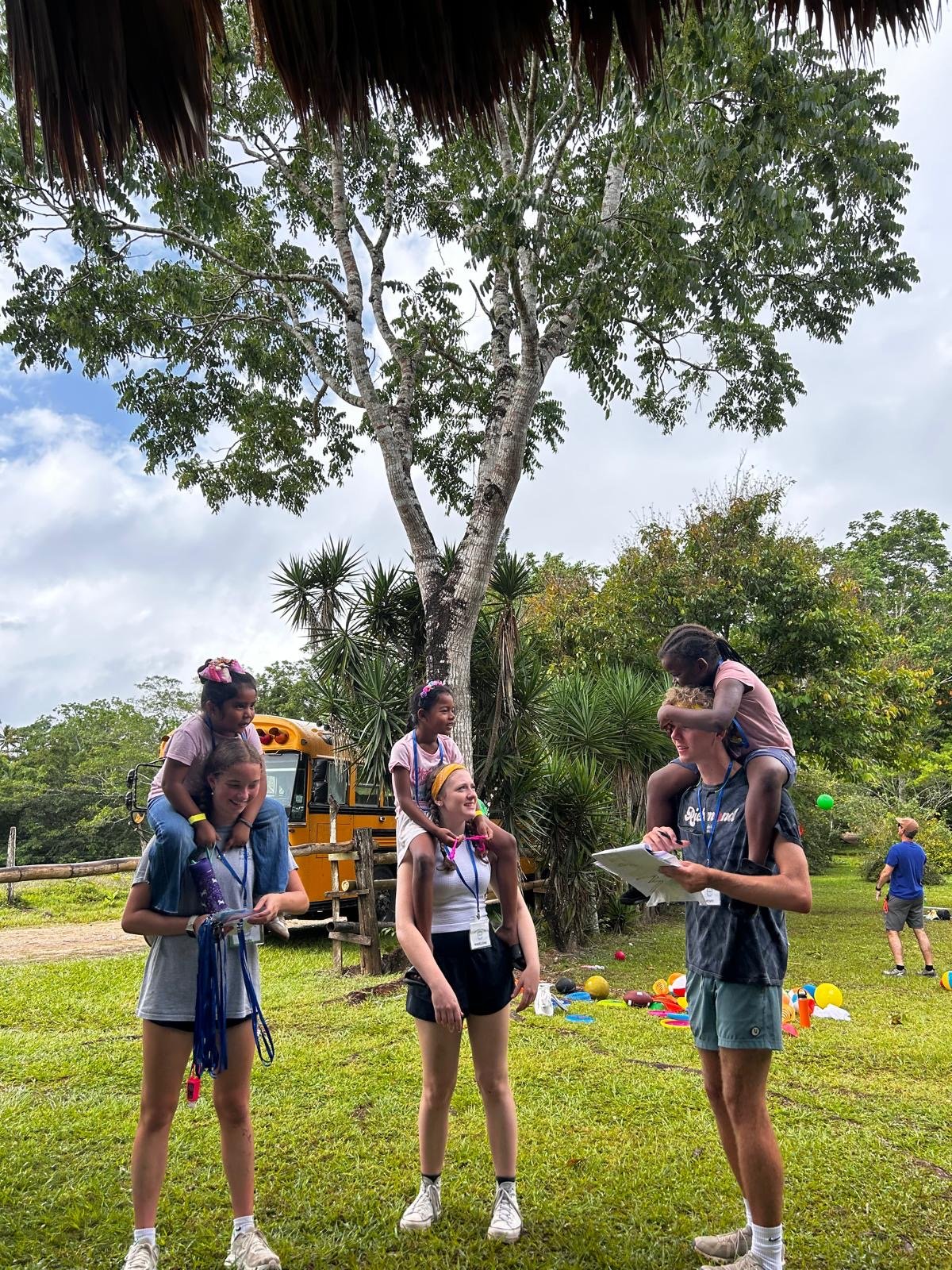
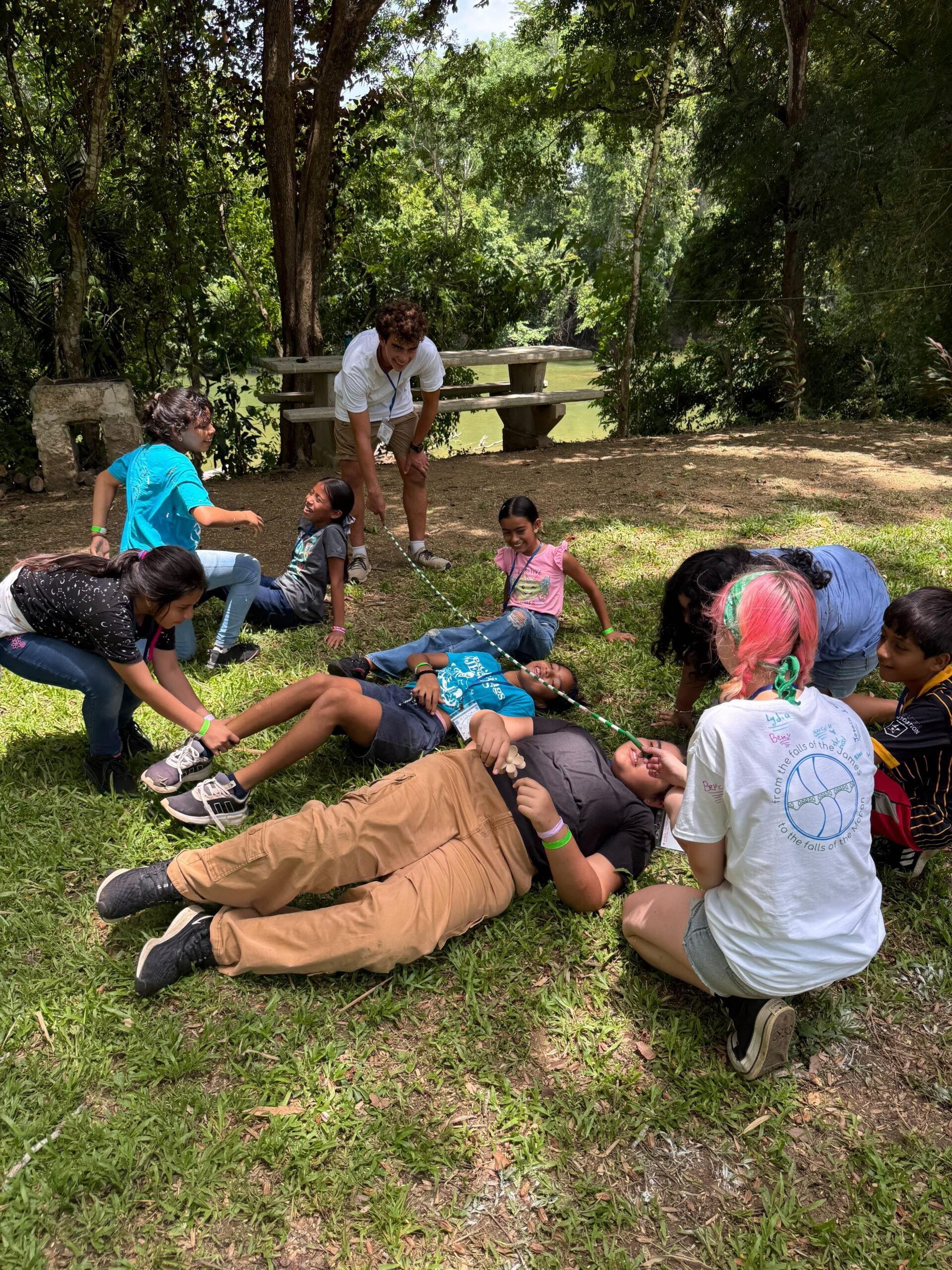
In one short week, we reconnected with multiple Belizean friends, including our host Chena Galvez, educator Mrs. Chris, and even a former camper – all grown up and grinning. For me personally, I loved greeting the Belizeans behind the old stories and listening to them lovingly share memories of our church’s work in Belize. Most of all, my thoughts dwell on the children – all 101 of them! It is clear to me that GHTC Summer Camp meets a great need. For most of these kids, GHTC Summer Camp was the event of the summer. Chena’s hot lunches were a highlight – many children named lunch their favorite part of camp, and some carefully saved food to bring home to their families. I cannot overstate the magic of watching the campers connect with their teen counselors. The four- to six-year-olds were the “Velcro kids” – connecting physically with clasped hands – always tugging, dancing, climbing, or hugging. The older kids had their own way, of course. From Monday to Friday, at each station – music, art, sports, and movement. – we could see the bonds form between camper and counselor. It was joy in constant motion.
Whether we have truly “changed the trajectory of the lives of the children we serve in Belize,” will be answered in time. I think we all left with the feeling that these children need more. If GHTC can provide one week per summer, could we partner with other Episcopal churches in Richmond to replicate our mission? Would that allow us to serve more children? And what about the older Belizean youth? Can we create a program for former campers to work as counselors alongside GHTC youth? Meaningful change will require a lasting commitment. These are topics for future discussion.
Our second goal, to build community among members of our GHTC church family, was reached and then some. There were 26 travelling missioners, including 13 teens ages 14 to 19. Countless other church members supported Belize Summer Camp through prayer, words of encouragement, volunteer parking hours, Oyster Roast preparation, Mother’s Day flowers, Parents’ Night Out, monetary donations, and supply donations. The wisdom of former Belize Summer Camp missioners from 2010–2017 was invaluable. Even as the travelers worked and played in Belize, our thoughts were with the GHTC “home team.” I hope that we lived up to your expectations. I am grateful for the opportunity to get to know this fantastic group of people. We are weaving the fabric of our church community – stronger and more vibrant with our shared experiences in Belize. I am looking forward to your smiles in the Parish Hall.
I would like to extend a special thanks to Father Brent. Amy, Robert, Dan, and I can handle spreadsheets and travel arrangements, but spiritual leaders we are not. Brent was our steady guide, encouraging us to center the GHTC youth in our planning. In Belize he frequently offered “how can I help?” but just as often he recognized a need and stepped in without request – phew! Our daily rhythm of Morning Prayer, evening reflections, and Compline provided those quiet moments to remember why this work matters.
It was a wonderful week, and our hearts are full.
Many Thanks,
Alice Herlihy
Belize Summer Camp Photos